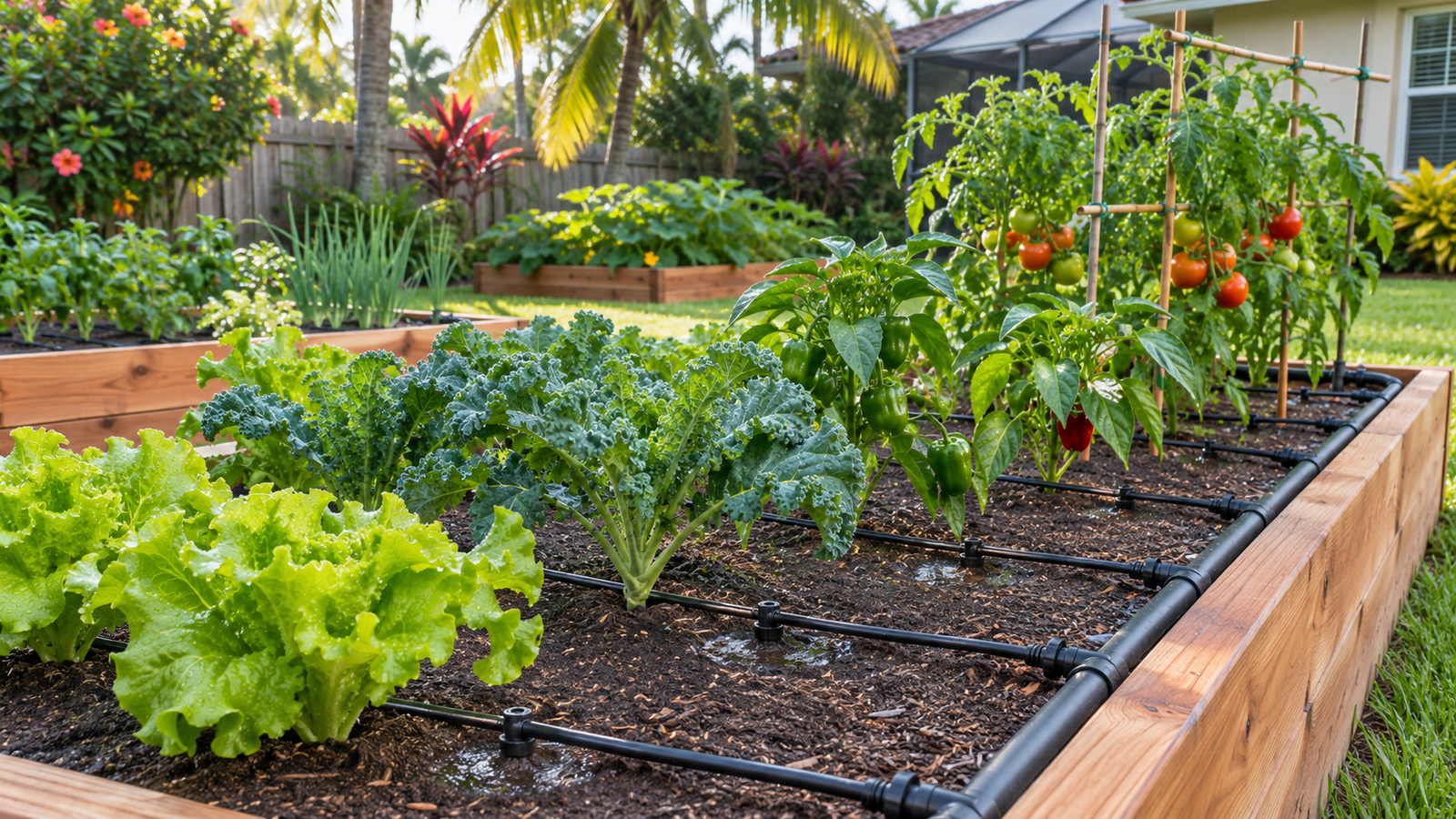
Growing vegetables at home is rewarding, but keeping garden beds evenly watered can take more attention than homeowners expect. Rainfall, sandy soil, changing temperatures, and plant growth all influence how quickly a garden dries out. A watering routine that works for young seedlings may need adjustment once tomatoes, peppers, or cucumbers begin producing.
How Drip Irrigation Works
Drip irrigation delivers water through tubing and emitters positioned near plant roots. Instead of spraying the entire garden, the system applies water to selected areas at a controlled rate. UF/IFAS identifies microirrigation as a practical option for vegetable plots and other home garden spaces.
A drip irrigation vegetable garden Florida homeowners install should match the actual planting arrangement. Closely spaced rows may need tubing with built-in emitters, while widely spaced plants may benefit from individual emitters.
The goal is consistent moisture where roots are growing. Equipment selection and placement should support that goal throughout the growing season.
Why Florida Soil Matters
Florida gardens do not all behave the same way. An in-ground bed with sandy soil may drain quickly, while a raised bed containing a blended growing medium may hold moisture longer.
UF/IFAS notes that many Florida soils drain easily and retain limited water. It also warns that excessive watering can harm vegetable plants.
Planning a drip irrigation vegetable garden Florida properties can support means checking conditions below the surface. After operating the system, inspect how deeply and widely moisture has moved.
A wet spot directly beneath an emitter does not necessarily mean the entire root zone received enough water.
Plan the Garden Before Placing Tubing
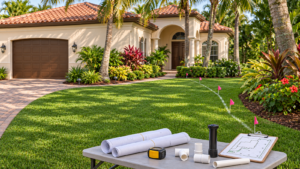
Begin with a simple sketch showing bed dimensions, pathways, water connections, and planned crops. Include access for weeding, harvesting, and seasonal planting changes.
For a drip irrigation vegetable garden Florida homeowners can manage easily, consider:
- Which beds share similar watering needs.
- Whether planting will follow rows or individual spaces.
- How tubing will avoid frequently used pathways.
- Where filters and connections will remain accessible.
- Whether the layout needs room for additional beds.
Planning first helps prevent awkward tubing routes and unnecessary fittings. It also makes future repairs easier because the system follows an understandable layout.
Choose Components That Work Together
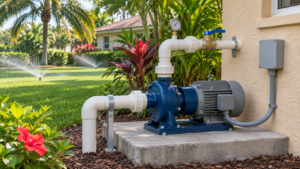
A garden system needs more than tubing connected to a faucet. Filters, pressure regulation, fittings, valves, and emitters must be compatible with the water source and intended operating conditions.
When designing a drip irrigation vegetable garden Florida homeowners should check manufacturer specifications rather than mixing components based only on appearance.
Emitter flow rates influence how much water reaches each location. Tubing length and available pressure also affect performance. Ask your installer to confirm appropriate backflow protection for the connection.
Keep component information and a basic layout drawing. Knowing which products were installed makes replacement and troubleshooting more straightforward.
Position Emitters Around the Root Zone
Emitter placement should reflect crop spacing and how water moves through the growing medium. One arrangement may not suit every vegetable bed.
The drip irrigation vegetable garden Florida homeowners envision should also account for changes as plants develop. A small transplant has a different root distribution from a mature, productive plant.
Check the wetting pattern before assuming additional run time will solve a dry area. Sometimes the bed needs another drip line or a different emitter arrangement.
Avoid placing tubing where tools routinely strike it. Secure lines so they remain in position during gardening activities.
Build a Watering Schedule Through Observation
There is no single watering duration that fits every Florida vegetable garden. Soil, weather, plant size, emitter output, and exposure all influence the schedule.
For a drip irrigation vegetable garden Florida homeowners should inspect soil moisture regularly and observe plant condition. Check more than one location, including areas between emitters.
If moisture remains excessive, investigate scheduling, drainage, or leaks. If roots are not receiving enough water, review both application time and coverage.
Record adjustments and their results. A few notes about weather, watering, and soil conditions can help you make more useful changes than repeatedly guessing at controller settings.
Use Mulch Thoughtfully
Mulch can support moisture management by slowing evaporation from the soil surface. UF/IFAS also identifies benefits including reduced weed growth and moderated soil temperatures, while warning that excessive mulch can interfere with water reaching roots.
Mulch is helpful in a drip irrigation vegetable garden Florida homeowners maintain, but it should not hide problems indefinitely.
Keep connections accessible and check beneath the mulch periodically. Confirm that tubing has not shifted, emitters are operating, and moisture reaches the intended areas. Follow suitable mulching guidance for the crops and materials you use.
Adjust After Rain and Seasonal Changes
A timer provides convenience, but it cannot replace observation. Rainfall may reduce watering needs, while changing sun exposure and plant growth can require another review.
A drip irrigation vegetable garden Florida homeowners establish during one season may need different settings during the next. Newly planted beds should also be reviewed separately from established crops.
After rain, check the soil rather than assuming every bed received equal moisture. Containers, covered beds, and exposed in-ground gardens may respond differently.
Review automatic settings whenever crops are removed, replanted, or relocated.
Make Maintenance Part of Gardening
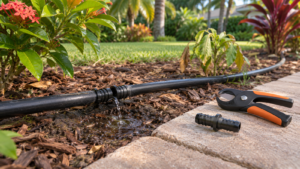
Inspect irrigation while checking vegetables for growth and harvest readiness. Look for disconnected fittings, damaged tubing, blocked emitters, and unusual wet areas.
Reliable performance in a drip irrigation vegetable garden Florida homeowners depend on comes from noticing changes early.
Clean filters and flush lines according to manufacturer instructions. If one section performs differently, investigate the cause before increasing watering across the entire garden.
Before planting another crop, review tubing placement and test the system. Seasonal garden changes are an opportunity to correct small problems.
Plan Your Vegetable Garden Irrigation With Bartram Outdoor
A productive garden needs irrigation that fits the property and remains practical to maintain. Thoughtful planning connects soil conditions, plant spacing, equipment, and watering decisions.