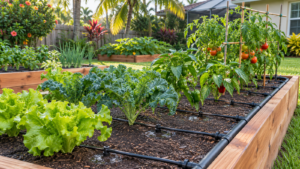
Drip irrigation delivers water close to plant roots, making it a useful option for vegetable gardens, flower beds, and landscaped areas. However, a running irrigation zone does not always mean every plant receives the water it needs.
1. Start With a System Walkthrough
Before changing watering times, operate the affected zone and follow the tubing through your landscape. Look for disconnected fittings, damaged lines, unusual puddles, and emitters that appear inactive.
Compare plants near the water supply with those farther along the line. Record whether the problem affects one plant, several neighboring plants, or the entire zone.
Diagnosing drip irrigation problems Florida properties experience becomes easier when you document the pattern. Take photographs and note recent landscaping work, controller changes, or repairs. These observations provide a useful starting point for deciding what to check next.
2. Check Emitters That Deliver Little or No Water
An emitter is the small component that releases water near a plant. Its narrow passage can become blocked by sediment or other material in the water supply. UF/IFAS identifies clogged emitters and punctured tubing as common microirrigation problems.
For localized drip irrigation problems Florida homeowners notice, compare the affected emitter with a functioning emitter of the same type.
Turn off the water before servicing components. Follow the manufacturer’s cleaning instructions, or replace a failed emitter with a compatible model and flow rate. Avoid enlarging its opening with a needle, which can change its intended performance.
3. Inspect the Filter
When several emitters develop weak flow, inspect the filter before replacing individual parts. A dirty filter may restrict the water reaching the zone.
Recurring drip irrigation problems Florida gardens experience can also indicate that filtration needs closer evaluation. UF/IFAS explains that microirrigation systems need filtration to help prevent emitter plugging. The appropriate filtration depends partly on the water source and contaminants present.
Shut off the supply and release pressure according to the equipment instructions before opening a filter housing. Clean or replace the element as directed. If it becomes dirty again quickly, arrange an assessment of the water supply and filtration setup.
4. Find Leaks and Disconnected Fittings
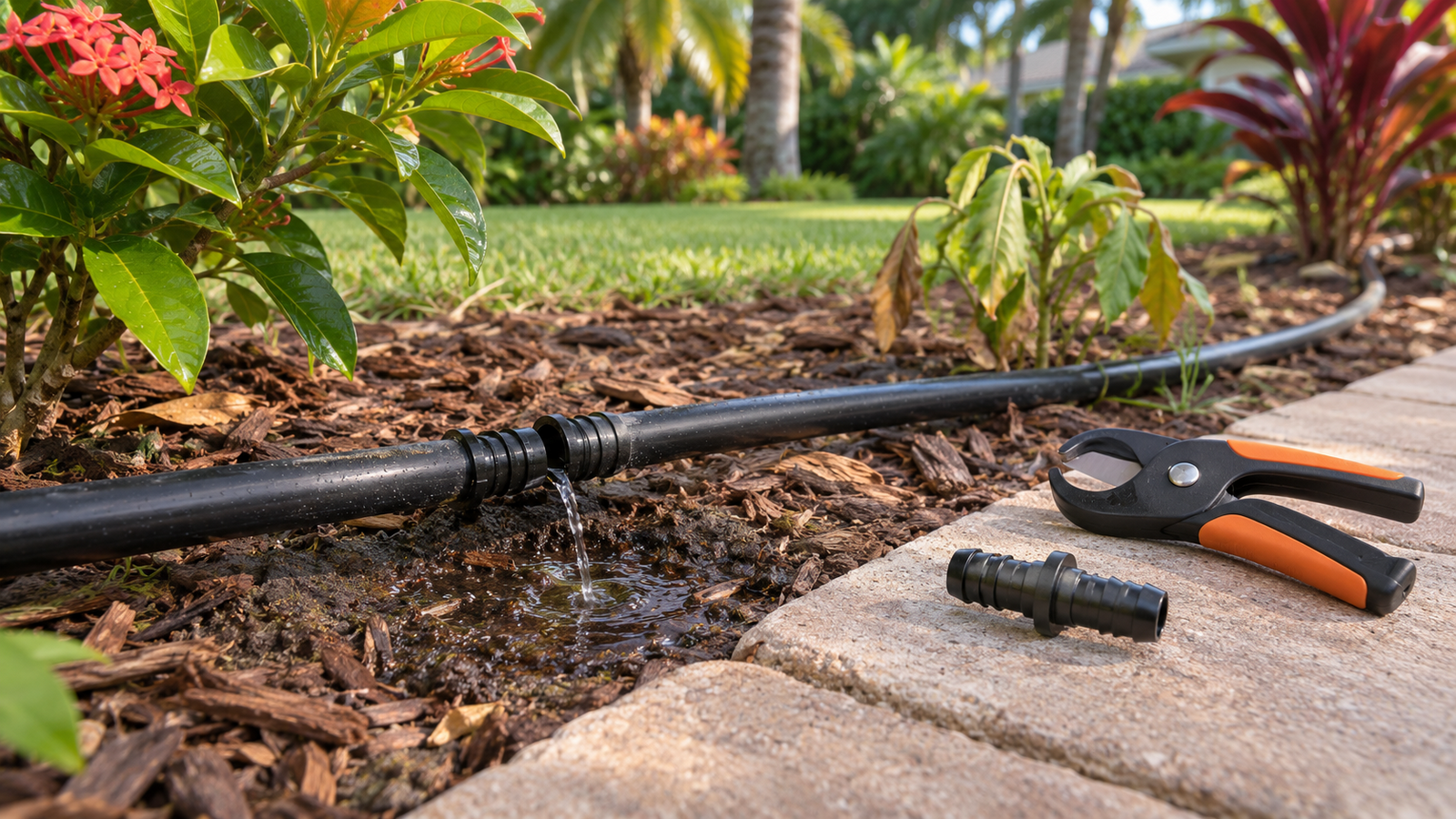
A split tube or loose connection can create a wet patch while leaving nearby plants dry. Inspect tubing around recently planted shrubs, edging, pathways, and areas exposed to maintenance equipment.
Some drip irrigation problems Florida homeowners discover begin after routine gardening. Rain Bird notes that shovels, lawnmowers, string trimmers, and animal activity can damage drip components.
For an accessible repair, shut off the supply and use fittings designed for the tubing’s actual size and material. Replace damaged sections rather than relying on a temporary patch. Run the zone afterward and check both the repair and downstream emitters.
5. Evaluate Water Pressure
Pressure problems may affect much of a zone. Excessive pressure can damage components, while insufficient operating pressure can prevent equipment from delivering water as designed.
When investigating widespread drip irrigation problems Florida landscapes develop, check whether the system has the appropriate pressure regulator. Florida Water Star guidance emphasizes pressure regulation, filtration, and flushing provisions for reliable microirrigation operation.
Do not assume opening a valve farther will solve weak delivery. A technician can measure operating pressure and compare it with the manufacturer’s requirements. This helps identify whether the problem involves regulation, supply, restrictions, or system layout.
6. Flush Lines Correctly
Debris can remain inside tubing after installation or repairs. Cleaning an emitter alone may leave material upstream that causes another blockage.
For repeat drip irrigation problems Florida homeowners face, check the manufacturer’s flushing procedure. Rain Bird recommends periodic flushing to remove accumulated sediment.
Use the designated flush points or removable ends as instructed for your system. Restore closures securely before returning the zone to normal operation.
If blockages continue, seek a diagnosis instead of repeatedly replacing parts. Avoid adding household cleaners or improvised chemical treatments; the underlying cause and equipment compatibility need evaluation first.
7. Reconsider Emitter Placement
A working emitter can still water the wrong location. Plants grow, roots expand, and tubing may shift during gardening.
Some apparent drip irrigation problems Florida homeowners observe are coverage problems. Check whether water reaches the intended root area rather than an empty section of mulch.
Florida Water Star guidance notes that emitter placement may need adjustment as plants mature and that soil texture affects spacing.
Review placement before increasing runtime. Adding emitters also changes demand on the zone, so substantial expansions should include a capacity check.
8. Separate Watering Problems From Plant Symptoms
Wilted leaves do not automatically prove that irrigation is insufficient. Check soil moisture near the affected plant and compare it with neighboring areas.
Before responding to drip irrigation problems Florida gardens appear to have, confirm that emitters operate and look for persistent wetness as well as dryness. UF/IFAS recommends monitoring plants for both excessive and inadequate watering.
Review rainfall, controller settings, plant needs, and drainage conditions together. Extending every watering cycle can leave functioning areas too wet while a blocked outlet remains ineffective. Change one setting at a time and observe the result.
9. Know When to Request Help
Persistent drip irrigation problems Florida properties experience deserve a closer assessment when basic checks do not explain the symptoms.
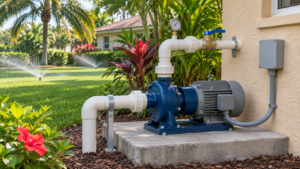
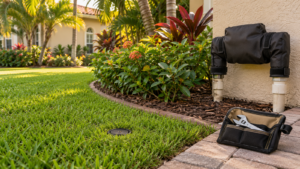
Request professional help for recurring leaks, widespread low flow, suspected underground damage, or repeated clogging. Pump, electrical, and backflow equipment concerns also warrant appropriate professional attention.
Bring photographs, controller settings, and a description of when the problem occurs. Explain whether it started suddenly or developed gradually. Clear observations help guide troubleshooting and support a repair recommendation based on the system’s condition.
Plan Your Next Irrigation Improvement
Managing drip irrigation problems Florida homeowners encounter starts with observation, compatible components, and regular checks.
At Bartram Outdoor in Palm Beach, Florida, we help homeowners evaluate irrigation concerns and plan practical improvements. Contact our team to discuss uneven watering, recurring leaks, or changes your garden may need.