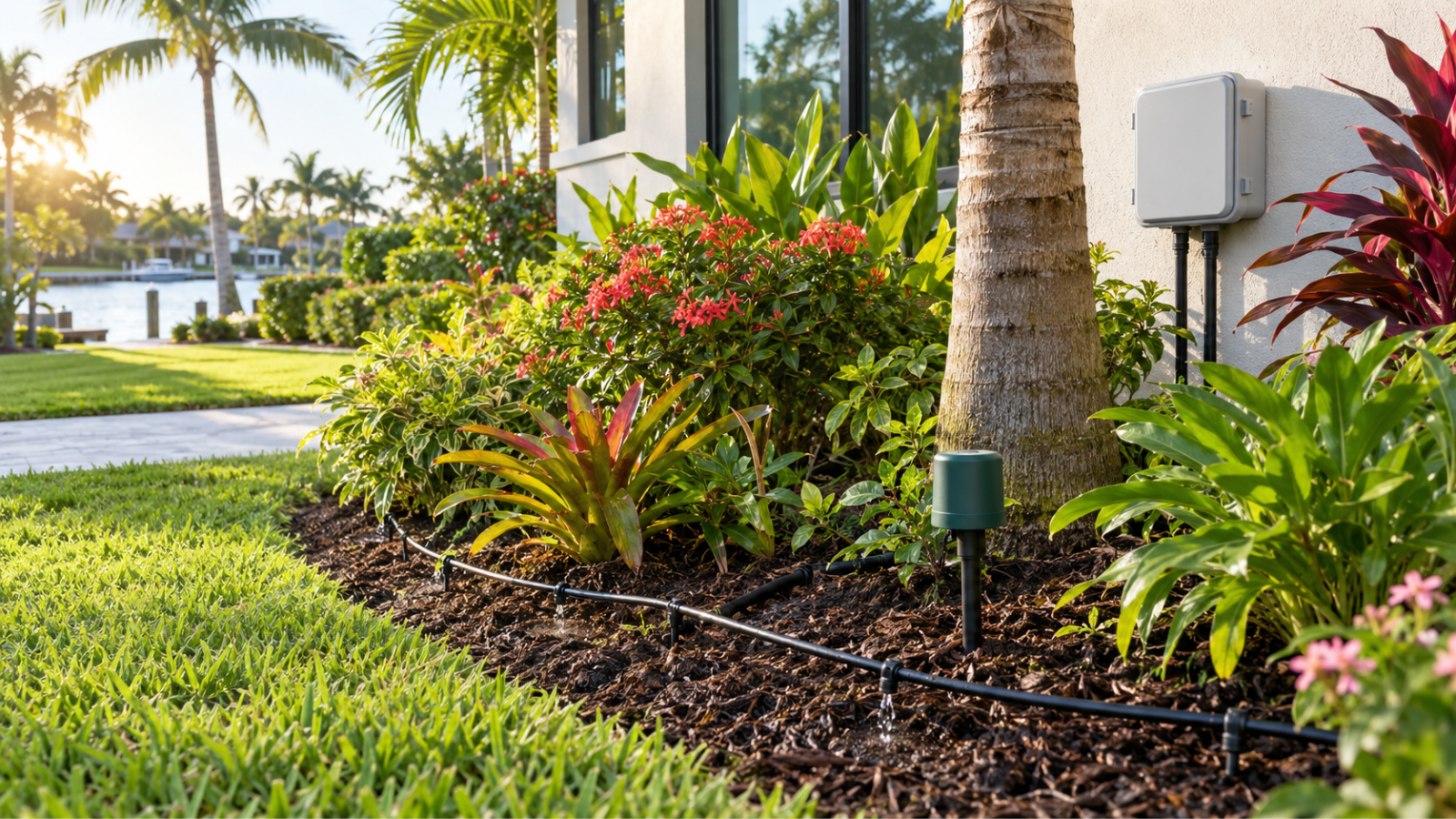
Florida homeowners understand how challenging it can be to maintain a healthy landscape. Intense sunlight, sandy soil, seasonal rainfall, high temperatures, and varying plant needs can make efficient watering difficult. Traditional irrigation methods may apply too much water in certain areas while leaving other plants too dry. Fortunately, smart irrigation technology offers a more precise solution.
What Is Smart Drip Irrigation Florida Technology?
Drip irrigation uses tubing, emitters, valves, and pressure-regulating components to apply water slowly near the base of plants. Unlike traditional sprinklers, which spray water over a broad area, drip systems target specific root zones.
Smart technology improves this process by connecting the irrigation system to an advanced controller. Depending on the equipment, the controller may use local weather information, soil-moisture sensors, rainfall data, or customized schedules to determine when watering is needed.
A smart drip irrigation Florida system can automatically adjust watering according to changing landscape conditions. Instead of following the same schedule throughout the year, it can modify watering frequency or duration based on rainfall, temperature, and plant requirements.
Why Precision Watering Matters in Florida
Florida landscapes often contain a combination of tropical plants, native species, shrubs, flowers, palms, and lawn areas. These plants do not all require the same amount of water. Applying one watering schedule across the entire property may lead to overwatering in some zones and underwatering in others.
Precision watering helps solve this problem. Drip emitters can be selected and positioned according to each plant’s needs. Some emitters provide a slow drip, while others distribute water across a slightly larger area.
By delivering moisture close to the roots, smart drip irrigation Florida technology can minimize evaporation and reduce the amount of water lost to wind. It can also help prevent overspray on walls, windows, walkways, driveways, and outdoor furniture.
Key Components of a Smart Drip Irrigation System
A dependable system contains several components that must work together correctly.
The smart controller serves as the system’s control center. It manages watering schedules and may receive information from weather services or connected sensors. Homeowners may also be able to monitor and adjust the system through a smartphone application.
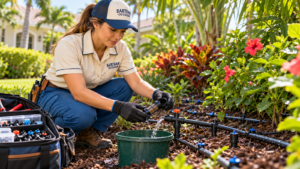
Drip tubing carries water through planting beds and landscaped areas. Smaller distribution lines may branch from the primary tubing to reach individual plants.
Emitters regulate how quickly water is released. Selecting the correct emitter flow rate is important because plants with different sizes, root systems, and watering needs may require different amounts of moisture.
Pressure regulators help reduce incoming water pressure to a level suitable for drip irrigation. Filters capture debris that could otherwise clog small emitter openings. Valves separate the landscape into watering zones, allowing each area to operate on its own schedule.
Every component of a smart drip irrigation Florida system should be properly selected, installed, and adjusted to support dependable performance.
Benefits of Smart Drip Irrigation Florida Systems
One of the most significant benefits is improved water efficiency. Because water is delivered directly to targeted areas, less moisture may be wasted through overspray, runoff, and evaporation.
Smart scheduling is another advantage. A conventional timer may continue watering after rainfall unless it is manually adjusted or connected to a working rain sensor. Smart controllers can respond to changing conditions and modify the watering schedule when appropriate.
Drip irrigation may also support healthier plants. Slow water application gives moisture time to soak into the root zone rather than running across the soil surface. This is particularly helpful in Florida landscapes where sandy soil may drain quickly.
Homeowners may also notice fewer weeds in spaces between plants. Because the system waters selected root zones instead of the entire bed, areas without desired plants may receive less moisture.
A properly installed smart drip irrigation Florida system can also reduce water contact with plant leaves. Keeping foliage drier may help limit certain moisture-related plant problems, although appropriate plant spacing and landscape care remain important.
Where Smart Drip Irrigation Works Best
Smart drip systems are especially useful in flower beds, foundation plantings, vegetable gardens, container arrangements, hedge lines, and areas containing shrubs or ornamental plants. They can also be helpful for newly installed landscaping that requires consistent moisture while roots become established.
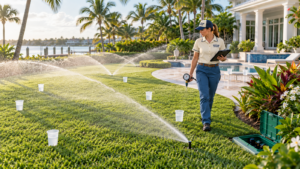
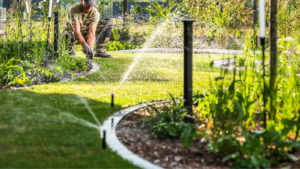
Drip irrigation is not always the best solution for every portion of a property. Large turf areas may be better served by properly designed rotary nozzles or other sprinkler equipment. Many homes benefit from a combined system that uses sprinklers for lawns and drip irrigation for planting beds.
Bartram Outdoor can evaluate the property and determine where smart drip irrigation Florida equipment will provide the greatest benefit. Creating separate zones for turf, shrubs, flowers, and other planting areas allows each portion of the landscape to receive more appropriate watering.
Common Problems to Watch For
Although smart drip irrigation is efficient, it still requires inspection and maintenance. Emitters can become clogged by mineral deposits, sediment, soil, insects, or landscaping debris. Tubing may be damaged by yard tools, animals, roots, or routine landscape work.
Emitters can also move away from their intended positions. When this happens, water may no longer reach the plant’s active root zone. Landscape growth creates another concern. A system that worked well when plants were small may need to be adjusted as roots and canopies expand.
Smart controllers also require correct programming. Weather-based technology cannot compensate for improper zone settings, damaged valves, incorrect flow rates, or poor emitter placement. A professional inspection can help ensure that the physical system and smart controls continue working together.
Routine maintenance keeps a smart drip irrigation Florida system operating efficiently and helps homeowners identify minor problems before they lead to stressed plants or wasted water.
Professional Installation Versus DIY Setup
Drip irrigation products are widely available, but designing a complete system requires more than connecting tubing and emitters. Water pressure, flow capacity, filtration, zone layout, plant selection, sun exposure, soil conditions, and controller programming all affect performance.
A system with insufficient pressure may not provide consistent water to distant emitters. Excessive pressure can damage connections or create leaks. Incorrect emitter spacing may leave portions of a planting bed dry, while excessive flow can saturate root zones.
Professional installation provides a system designed around the property rather than a collection of individual components. Bartram Outdoor considers current landscaping, expected plant growth, available water pressure, and the homeowner’s maintenance goals when planning smart drip irrigation Florida solutions.
Tips for Getting the Best Results
Homeowners should periodically walk through the landscape while the irrigation system is operating. Look for clogged emitters, damaged tubing, pooling water, dry soil, and plants showing signs of stress.
Seasonal schedule adjustments are also important. Florida’s rainy season, dry periods, and changing temperatures can significantly affect landscape water requirements. Smart controls can automate many adjustments, but the system should still be reviewed to confirm that its settings match actual conditions.
Mulch can help retain soil moisture and protect drip tubing, but emitters should remain accessible for inspection. Homeowners should also avoid covering equipment so deeply that leaks or clogs become difficult to locate.
Most importantly, schedule professional maintenance when watering patterns become inconsistent. Timely adjustments can help preserve the efficiency of a smart drip irrigation Florida system.
Upgrade Your Landscape with Bartram Outdoor
Smart irrigation technology gives homeowners greater control over when, where, and how water is applied. With targeted emitters, customized zones, weather-responsive controls, and professional maintenance, a smart drip system can support healthy plants while reducing avoidable water waste.
Bartram Outdoor provides customized irrigation services for homeowners throughout Palm Beach County and Florida’s Space Coast. Whether you are upgrading an existing system or planning irrigation for a new landscape, our team can create a smart drip irrigation Florida solution designed around your property.