Building a new home gives you an opportunity to plan the landscape before the lawn, planting beds, driveway, and walkways are finished. It is also the best time to decide how those areas will be watered. If irrigation is left until the end of construction, pipe routes and sprinkler placement may have to work around features that are already in place.
Begin New Construction Irrigation Planning With a Site Plan
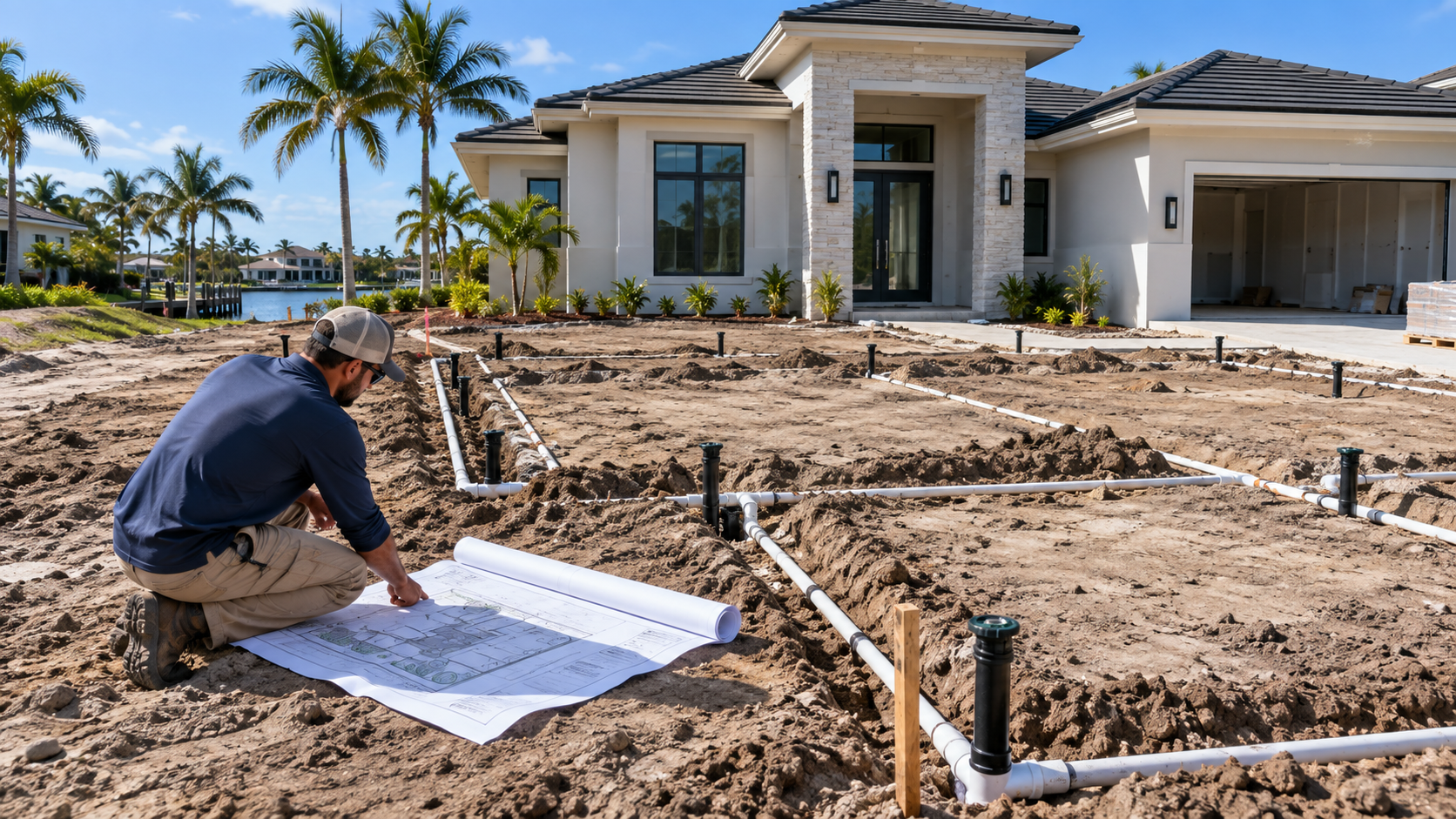
Start with a current plan showing the house, property boundaries, driveway, walkways, patios, and proposed planting areas. Mark any future features you expect to add, such as a pool, outdoor kitchen, fence, or garden. They can affect where irrigation pipes should run.
Your final landscape plan is just as useful. Grass, shrubs, trees, and flower beds do not necessarily need the same watering method or schedule. If you have not selected every plant, identify the general purpose of each area so the system can be designed with reasonable flexibility.
Good new construction irrigation planning also accounts for changes in sun and shade. A lawn beside a reflective driveway may have different needs from a shaded bed along the house. Planning these areas early makes it easier to create zones that match the landscape.
Coordinate Before Other Outdoor Work Begins
The timing of irrigation installation matters. Pipes that need to cross beneath a driveway or walkway should be considered before those surfaces are finished. The location of utilities, drainage features, and planned hardscaping should also be reviewed before trenches are laid out.
Ask your builder and irrigation contractor who is responsible for each stage. They should agree on when water service will be available, when irrigation lines can be installed, and when the system can be tested without interfering with other work.
This coordination is a practical benefit of new construction irrigation planning. It gives each trade a clearer picture of where irrigation components will go and reduces the chance that later construction will disturb them. Keep an updated plan if the home’s exterior layout changes during the build.
Check the Water Supply Before Designing Zones
A sprinkler layout must be based on the water available at the property. Pressure and flow affect how many sprinklers can operate together and which equipment is appropriate. A drawing made without that information may need substantial changes when installation begins.
Discuss the proposed water source, connection point, and location of the irrigation controller with your contractor. Backflow protection and other connection details should be addressed as part of the system design and applicable local requirements.
Professional new construction irrigation planning starts with these practical limits. The goal is not simply to place sprinkler heads across a drawing; it is to design zones that can operate properly with the property’s water supply.
Give Lawn and Planting Beds Different Attention
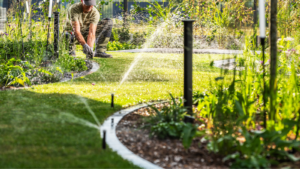
A broad lawn may be suited to sprinkler heads that distribute water across turf. Flower beds and shrubs may be better served by a different approach, including drip irrigation where appropriate. Keeping areas with different needs on separate zones makes their watering easier to manage.
For example, a sunny lawn and a shaded planting bed may not need to run for the same duration. Combining them in one zone could leave one area too wet or the other too dry. Plant choice, soil conditions, and the size of each area should inform the design.
Florida-Friendly Landscaping guidance emphasizes matching irrigation to landscape conditions and avoiding unnecessary watering. That principle is especially useful during new construction irrigation planning, when zone boundaries can still be adjusted before installation. University of Florida IFAS irrigation design standards provide additional design guidance.
Plan Sprinkler Coverage Around the Finished Yard
A yard under construction rarely looks like the finished property. Soil grades may change, planting beds may widen, and a new path may alter the space available for a sprinkler. Design decisions should reflect the final layout rather than the temporary construction site.
Sprinkler heads need to be selected and positioned for the areas they will water. Poor placement can leave dry patches or direct spray toward pavement, walls, and windows. Plant growth matters too: a small shrub installed today may eventually block a nearby sprinkler.
During new construction irrigation planning, review the proposed head locations alongside the landscape plan. Ask how the design will cover narrow strips, corners, and irregular lawn shapes. This is easier to address on paper than after grass and plants have been installed.
Choose Controls You Can Understand and Use
An irrigation controller manages when each zone runs. Ask where it will be located, how schedules will be set, and who will explain its operation after installation. A controller is most useful when you understand how to pause watering, adjust a zone, and respond to changing conditions.
Weather-aware controls and rain-sensing features may help avoid watering when it is unnecessary. They still need to be set up for the actual landscape and checked periodically. No controller can make up for poor sprinkler placement or an undetected leak.
Include the controller and any planned sensors in your new construction irrigation planning conversations. Also decide whether you want room for future zones if part of the landscape will be completed later.
Test the System Before the Project Is Complete
Once installed, the system should be run and checked zone by zone. This allows the contractor to inspect spray direction, coverage, leaks, and controller settings while adjustments are still straightforward. It also gives you an opportunity to see how the system works.
Ask for a final walkthrough and a record of the zones and key components. Knowing where valves, shutoffs, and the controller are located will make future maintenance easier. If landscaping changes after the initial installation, revisit the watering schedule rather than assuming the original settings will always fit.
Testing and ongoing adjustment are part of effective new construction irrigation planning. Irrigation should support the finished landscape, and its schedule may need to change as plants establish and seasons shift. The EPA’s irrigation guidance also emphasizes proper scheduling and regular system checks.
Build a System Around Your Future Landscape
The best time to think about irrigation is while you can still coordinate it with the rest of your new home. A clear site plan, measured water supply, sensible zones, and an installation schedule give the system a stronger starting point.