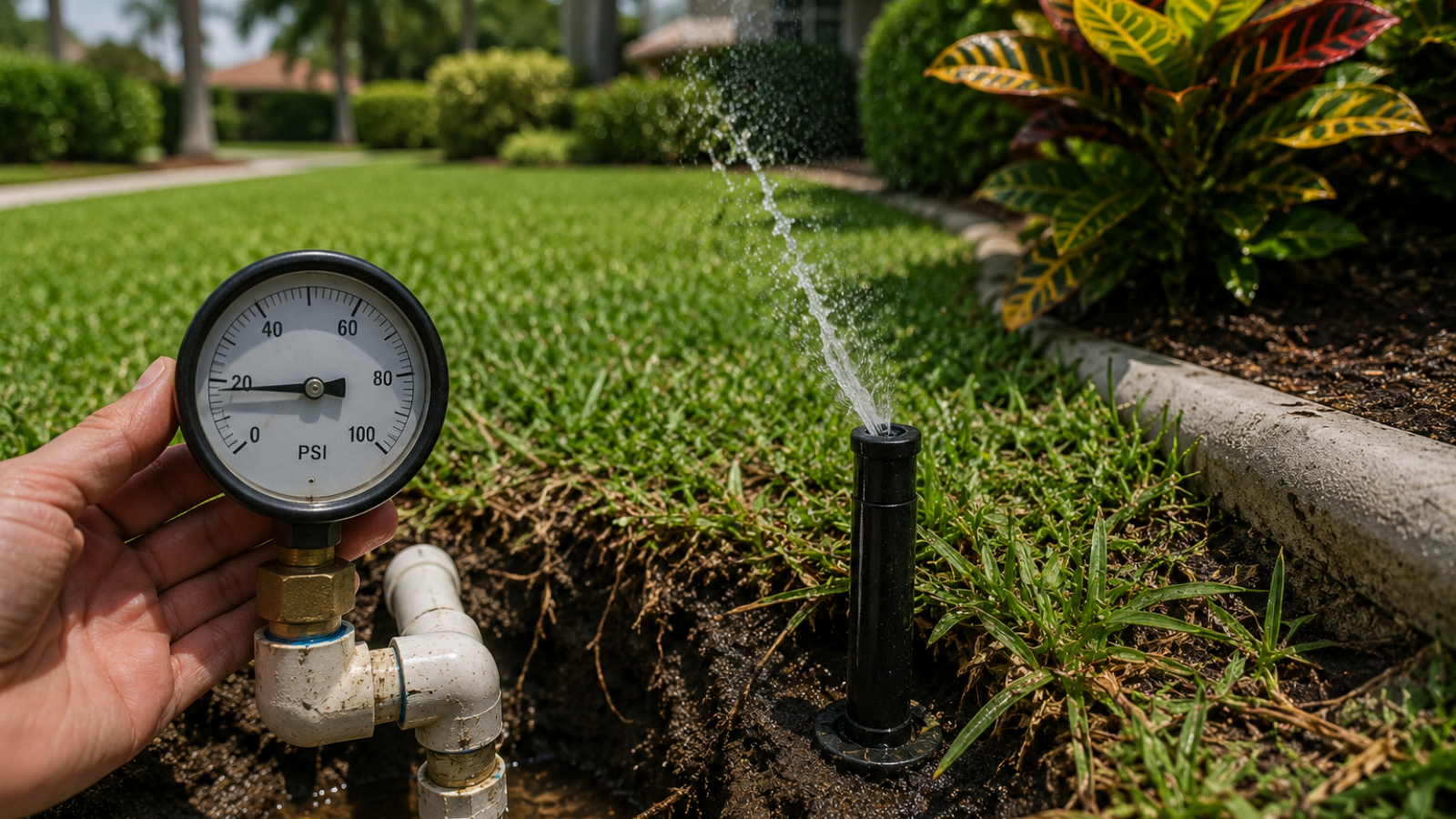
A sprinkler system needs consistent water pressure to distribute water evenly across your landscape. When pressure drops, sprinkler heads may not rise completely, rotating heads may stop turning, and parts of your lawn may receive little or no water. These problems can quickly lead to brown grass, stressed plants, and inefficient watering.
Signs Your Sprinkler System Has Low Water Pressure
Low water pressure is usually easy to recognize once the irrigation system is running. The problem might affect one sprinkler head, a single zone, or the entire system.
Common warning signs include:
- Sprinkler heads that do not pop up completely
- Short or weak spray patterns
- Rotors that turn slowly or remain stationary
- Dry patches between sprinkler heads
- Water pooling near one part of the yard
- Sprinklers working well near the valve but poorly farther away
- One zone performing worse than the others
- Water failing to reach the edges of the lawn
Scheduling low water pressure sprinkler repair allows a technician to test the system and determine whether the problem comes from a damaged component, restricted water flow, or an issue with the original design.
A Broken Underground Irrigation Pipe
A cracked or broken underground pipe is one of the most common causes of a sudden pressure loss. Water escapes before it reaches the sprinkler heads, reducing the pressure available throughout the affected zone.
Signs of an underground leak may include unusually wet soil, soft areas in the lawn, pooling water, erosion, or grass that appears greener than the surrounding landscape. You may also notice water bubbling from the ground while the system operates.
Underground leaks are not always visible. South Florida’s sandy soil can allow escaping water to drain below the surface, concealing the problem. Professional low water pressure sprinkler repair can locate the damaged area and restore the pipe without unnecessarily disturbing large sections of the yard.
Damaged or Missing Sprinkler Heads
Lawn equipment, vehicles, foot traffic, tree roots, and regular wear can crack sprinkler heads. A broken head may release a large amount of water close to the ground, leaving insufficient pressure for the remaining heads on the same zone.
Missing nozzles can cause a similar problem. Instead of producing a controlled spray pattern, the open sprinkler body releases water like a small fountain. Other sprinklers may fail to rise or deliver adequate coverage.
During low water pressure sprinkler repair, each head should be inspected for cracks, broken seals, missing nozzles, and improper installation height. Replacing the damaged component may restore the entire zone’s performance.
Clogged Sprinkler Nozzles or Filters
Palm Beach County properties commonly have sandy soil that can enter irrigation components during repairs or when a line breaks. Small particles, mineral buildup, and organic debris may clog sprinkler nozzles or filters.
A clogged nozzle generally affects only one head, although debris traveling through the system can restrict several sprinklers. The affected head may produce an uneven stream, spray in the wrong direction, or release very little water.
Cleaning or replacing clogged components is often a straightforward low water pressure sprinkler repair. However, repeated clogs may indicate a broken line, damaged filter, or another system-wide issue that requires further investigation.
Partially Closed or Failing Irrigation Valves
Every sprinkler zone depends on a valve opening fully so water can reach the sprinkler heads. A valve that is partially closed, obstructed, incorrectly adjusted, or beginning to fail may restrict water flow.
Valve problems often affect one complete zone rather than the entire irrigation system. You may hear the valve activate even though the sprinklers appear weak. Electrical problems with the controller or solenoid can also prevent the valve from opening properly.
Professional low water pressure sprinkler repair may involve cleaning the valve, checking its internal components, testing the solenoid, inspecting the wiring, or replacing the valve when necessary.
Too Many Sprinkler Heads on One Zone
Each property has a limited amount of water pressure and flow available. If too many sprinkler heads are connected to one zone, the combined demand may exceed the water supply.
This problem is common when sprinkler heads are added during landscape renovations without recalculating the zone’s requirements. The zone may have worked correctly when first installed but become overloaded after new flower beds, lawn areas, or irrigation components were added.
Effective low water pressure sprinkler repair may require dividing the overloaded zone, changing nozzle sizes, or redesigning part of the system. Simply installing different heads without considering flow requirements may not solve the underlying problem.
Pipes That Are Too Small
Pipe diameter influences how much water can move through an irrigation system. Pipes that are too narrow for the required flow create friction and pressure loss, particularly along long irrigation runs.
Improper pipe sizing is typically a design or installation problem. Sprinklers close to the water source may perform adequately, while those near the end of the line remain weak.
Correcting this issue can require more extensive low water pressure sprinkler repair, such as resizing part of the irrigation line or reorganizing the affected zone. A professional evaluation can determine whether pipe size is truly the cause before excavation begins.
Problems With the Backflow Preventer
A backflow prevention device protects the drinking water supply from contamination. If this device is damaged, clogged, incorrectly positioned, or not fully open, it may restrict water entering the irrigation system.
Because the backflow preventer is located near the system’s main supply, a restriction can affect every sprinkler zone. Homeowners may notice that the entire irrigation system suddenly operates with less force.
Backflow devices are important safety components and may be subject to local requirements. Have a qualified professional inspect them during low water pressure sprinkler repair rather than attempting an unapproved modification.
Municipal Water Supply Changes
Sometimes the irrigation system itself is not responsible for the pressure drop. Municipal maintenance, peak water-use periods, neighborhood construction, or changes in the local supply can temporarily reduce pressure.
Run the sprinkler system at a different permitted watering time to see whether the problem changes. You can also check whether indoor faucets seem weaker than normal.
If pressure is low throughout the home, contact your water utility or a licensed plumber. If household pressure is normal but the sprinklers remain weak, professional low water pressure sprinkler repair can help isolate the irrigation-specific cause.
Well Pump or Pressure Tank Problems
Some South Florida irrigation systems receive water from a private well rather than a municipal supply. A failing pump, clogged intake, damaged pressure switch, or improperly functioning pressure tank can reduce sprinkler performance.
The system may begin with acceptable pressure and then weaken as the zone continues to run. Pressure may also fluctuate, causing sprinklers to rise and fall repeatedly.
Well-related low water pressure sprinkler repair requires careful diagnosis because the issue may involve both the irrigation equipment and the water source. Testing the pump’s output can determine whether it supplies adequate pressure and flow.
Why Accurate Diagnosis Matters
Several sprinkler problems produce similar symptoms. Weak spray could result from a hidden leak, a clogged nozzle, an overloaded zone, or inadequate supply pressure. Replacing sprinkler heads without identifying the cause may waste time and money.
A professional evaluation may include checking static and operating pressure, measuring flow, activating each zone, examining sprinkler patterns, and inspecting valves and visible components.
Accurate low water pressure sprinkler repair addresses the source of the problem instead of temporarily hiding its symptoms. It also helps avoid unnecessary digging or component replacement.
Preventing Future Pressure Problems
Watch your irrigation system operate regularly rather than relying only on the controller. Early detection can prevent a small leak or damaged head from becoming a larger problem.
Homeowners should also:
- Keep grass and soil away from sprinkler heads
- Replace damaged heads promptly
- Avoid adding sprinklers without checking zone capacity
- Inspect the yard for wet or unusually green patches
- Adjust watering schedules for seasonal conditions
- Arrange routine professional maintenance
Preventive care reduces the likelihood of emergency low water pressure sprinkler repair and helps the system use water more efficiently.
Schedule Sprinkler Repair With Bartram Outdoor
Low water pressure can leave your landscape unevenly watered while increasing waste and operating costs. Whether the cause is a broken pipe, damaged head, clogged nozzle, valve restriction, overloaded zone, or failing water source, the right repair begins with a thorough inspection.
Bartram Outdoor provides dependable low water pressure sprinkler repair throughout Palm Beach County and Florida’s Space Coast. Our team understands local soil, weather, and landscape conditions and can recommend practical solutions for restoring reliable coverage.