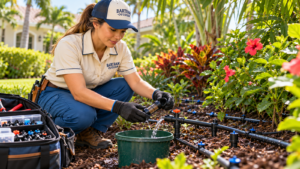
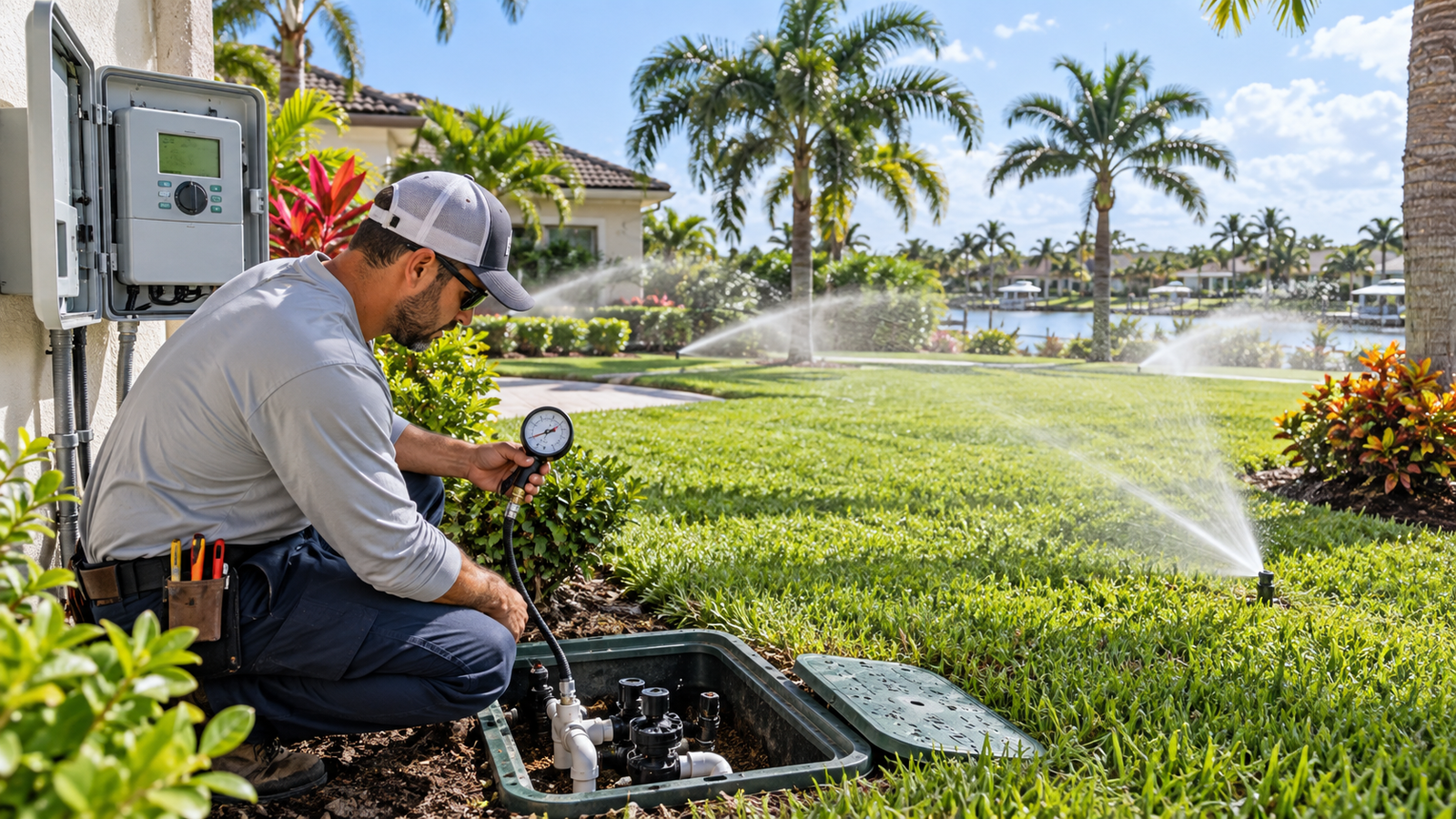
A sprinkler system can run on schedule and still waste water. A leaking connection, blocked nozzle, or poorly adjusted head may go unnoticed while the controller continues watering. Monitoring helps homeowners understand what the system delivers and whether the landscape actually needs it.
Irrigation System Monitoring Florida: Establish a Baseline
A baseline is a record of how the system performs when it is working properly. Without one, it is harder to recognize whether water use or sprinkler behavior has changed.
Record each zone’s purpose, watering schedule, and approximate operating characteristics. Note which areas contain grass, shrubs, or drip irrigation. Keep previous inspection reports and controller settings where they are easy to find.
A baseline should reflect the season and landscape condition. Newly planted areas may have different needs from established plants.
For irrigation system monitoring Florida properties require, compare similar conditions rather than assuming every month should show identical results. Rainfall, plant growth, and schedule changes all influence water demand.
1. Total Water Consumption
Water consumption tells you how much water is being used over a defined period. A separate irrigation meter or compatible monitoring device can make outdoor use easier to track.
If irrigation shares the household meter, a higher bill does not automatically prove a sprinkler leak. Visitors, indoor plumbing problems, billing-period length, and other changes may affect the total.
Compare consumption with watering schedules and recent rainfall. A rise without an obvious explanation deserves investigation.
During irrigation system monitoring Florida homeowners should look for patterns rather than react to one number. Record changes and ask a professional to assess unexpected consumption before adjusting every zone.
2. Flow Rate and Unexpected Flow
Flow rate measures water moving through the system, commonly in gallons per minute. A professional can establish expected flow for individual zones using suitable equipment.
A substantial change may suggest a leak, obstruction, equipment change, or another problem. It is a clue, not a complete diagnosis.
Flow when the system should be off also deserves attention. However, brief drainage after a cycle can differ from persistent leakage, so duration matters.
The EPA explains that flow-monitoring devices can identify consumption patterns associated with leaks or other irregularities.
For irrigation system monitoring Florida homeowners should understand which alerts their equipment provides and how to respond without repeatedly running a suspected leaking zone.
3. Operating Water Pressure
Pressure affects sprinkler performance. Excessive pressure can produce misting, while insufficient pressure may prevent equipment from operating as designed.
There is no single pressure target for every residential irrigation system. The appropriate range depends on the equipment, zone layout, and manufacturer specifications.
Pressure should be evaluated under relevant operating conditions. A reading taken while nothing is running may not describe what a sprinkler receives during watering.
The EPA notes that excessive pressure can contribute to misting and uneven coverage, and that suitable pressure-regulated sprinkler bodies can help manage it.
Professional irrigation system monitoring Florida assessments should compare readings with the installed equipment rather than use a universal setting.
4. Coverage and Application Uniformity
Coverage describes whether water reaches the intended area. Uniformity describes how evenly it is distributed.
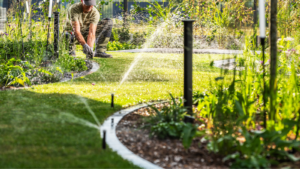
Watch for dry strips, overlapping wet patches, heads blocked by plants, and spray landing on pavement. A lawn can receive plenty of water overall while some sections receive too little.
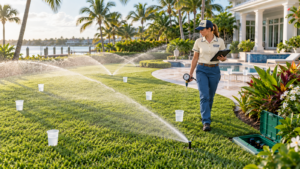
A catch-can test collects sprinkler water in containers placed across a zone. Comparing the collected amounts helps identify uneven applications. Test conditions matter, including wind and the layout of the containers.
UF/IFAS describes catch-can testing as a way to evaluate turf irrigation application.
For irrigation systems monitoring Florida lawns, uneven coverage should be corrected before simply extending runtime. Otherwise, already-wet areas may receive even more water.
5. Runtime and Water Delivered
Runtime is the number of minutes a zone operates. It is useful, but minutes alone do not tell you how much water reaches the landscape.
Different sprinkler types apply water at different rates. A spray zone and a drip zone should not automatically receive the same duration.
If measured flow remains steady at eight gallons per minute, a fifteen-minute cycle uses approximately 120 gallons. That calculation describes consumption; it does not prove the plants received the right amount.
Effective irrigation system monitoring Florida homeowners rely on connected runtime with measured application, soil conditions, and plant needs. Review both individual cycles and the total weekly schedule.
6. Soil Moisture and Rainfall Response
Soil moisture indicates whether water is available where roots can use it. Surface appearance alone can be misleading: dry-looking soil may have moisture below, while a wet surface does not guarantee adequate root-zone watering.
A suitable sensor can help inform irrigation decisions, but placement and setup must represent the area being managed.
Also check how the controller responds to rainfall. Confirm that relevant sensors are functioning and that bypass settings have not been left enabled unintentionally.
For irrigation systems monitoring Florida gardens, soil moisture and rainfall response help determine when watering is unnecessary. They complement equipment checks rather than replace them.
Turn Measurements Into a Maintenance Plan
Keep a simple log containing the date, rainfall, schedule changes, unusual water use, visible leaks, and areas needing attention. Photographs can help track recurring coverage problems.
Plant condition provides additional context, although brown grass or stressed leaves can have causes besides irrigation. Avoid increasing watering automatically.
Review concerns with an irrigation professional when measurements change unexpectedly or problems persist.