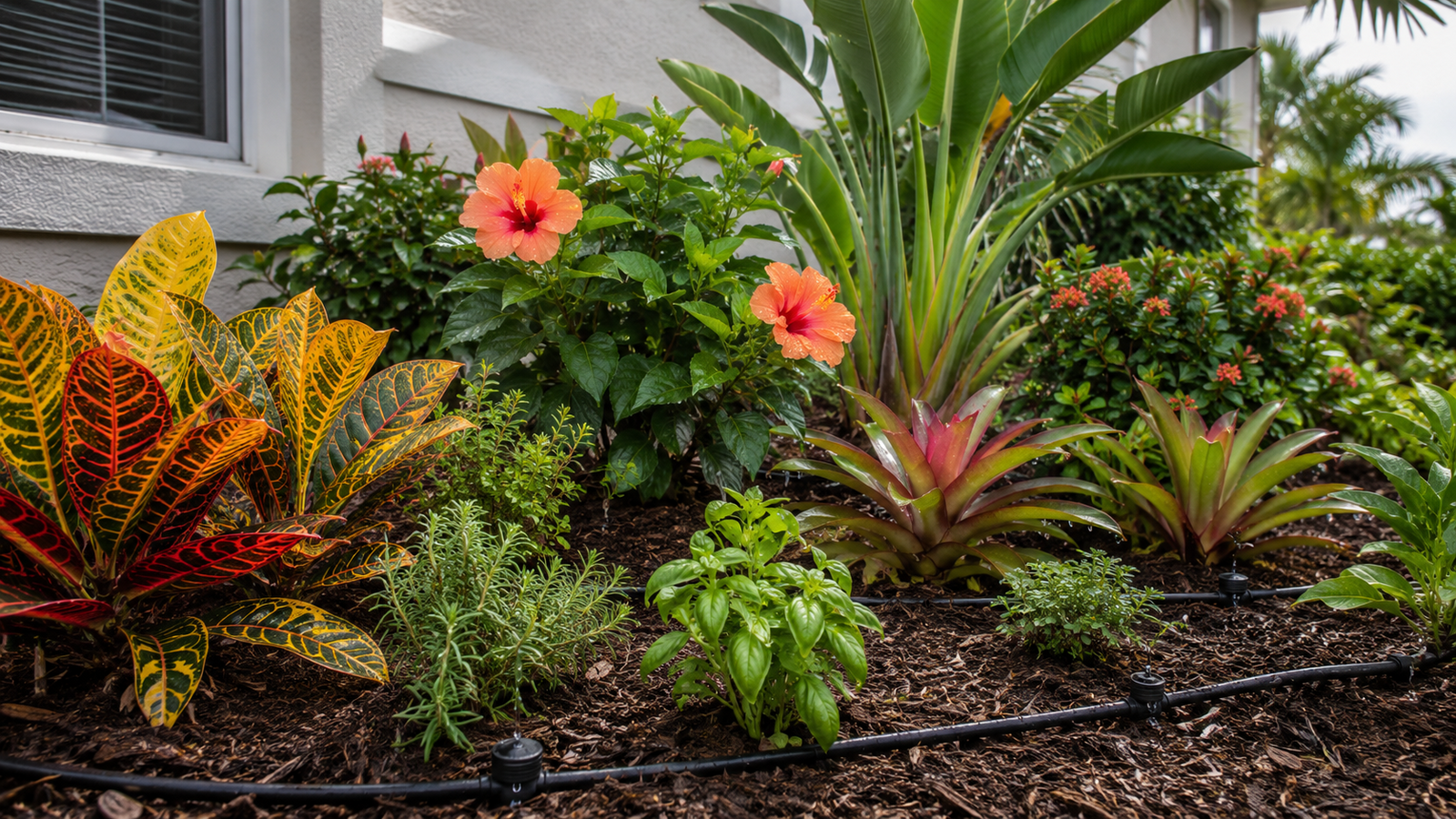
South Florida’s warm climate supports a colorful variety of flowers, shrubs, herbs, palms, and tropical plants. However, intense sunshine, sandy soil, seasonal drought, heavy rainfall, and high humidity can make landscape watering challenging. Drip irrigation offers homeowners an efficient way to deliver water directly to plant root zones without soaking unnecessary areas.
Why Drip Irrigation Works Well in South Florida
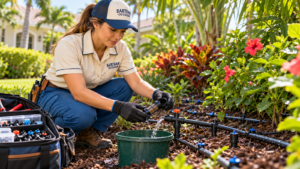
Drip irrigation applies water slowly through emitters or tubing positioned close to plant roots. Unlike conventional sprinklers, the system does not need to spray water across large areas of the landscape.
This targeted method offers several potential benefits:
- Reduced water loss from wind and evaporation
- Less runoff onto sidewalks and driveways
- More consistent moisture around plant roots
- Reduced water contact with leaves
- Fewer weeds in areas that do not need irrigation
- Flexible watering for different planting zones
- Easier irrigation of narrow or irregular garden beds
Although many plants can benefit from drip irrigation, their water requirements vary. The best drip irrigation plants Florida homeowners select should be grouped according to similar sunlight, soil, and moisture needs.
Hibiscus as Drip Irrigation Plants Florida Gardens Love
Hibiscus is a popular choice for South Florida landscapes because of its large, colorful flowers and tropical appearance. It performs best with consistent moisture, particularly during hot and dry periods.
Drip irrigation can supply water directly to the root area without regularly wetting the foliage. This helps homeowners maintain more consistent soil moisture while reducing unnecessary overspray.
Place emitters around the active root zone rather than directly against the trunk. As the hibiscus grows, the emitters may need to be repositioned to continue supporting healthy root development. These qualities make hibiscus one of the most recognizable drip irrigation plants Florida gardens can feature.
Crotons Add Year-Round Color
Crotons are known for their bright leaves in shades of green, yellow, orange, and red. Their bold foliage makes them suitable for foundation beds, tropical gardens, and decorative landscape borders.
Established crotons can tolerate brief dry periods, but they generally perform better with consistent watering. A drip system can help maintain even moisture without flooding the planting bed.
When using crotons as drip irrigation plants Florida homeowners should monitor how quickly the surrounding soil drains. Avoid keeping the roots constantly saturated, especially during the rainy season.
Ixora Works Well in Tropical Planting Beds
Ixora is another favorite in South Florida landscaping. Its clusters of colorful flowers can attract pollinators and add visual interest to hedges, borders, and foundation plantings.
These shrubs appreciate regular moisture but do not perform well when their roots remain waterlogged. Drip irrigation allows homeowners to apply controlled amounts of water based on weather and soil conditions.
Ixora can be a practical option among drip irrigation plants Florida landscapes use because emitters can be placed beneath the canopy, where water reaches the soil rather than the foliage.
Bougainvillea Benefits from Controlled Watering
Bougainvillea produces dramatic displays of pink, purple, red, orange, or white bracts. Once established, it is relatively drought tolerant and often flowers more successfully when it is not overwatered.
A properly adjusted drip irrigation system can deliver occasional deep watering without keeping the surrounding soil constantly wet. Too much water may encourage leafy growth while reducing flowers.
When including bougainvillea with other drip irrigation plants Florida gardens contain, place it in a separate irrigation zone when possible. This allows its watering schedule to remain different from plants that require consistently moist soil.
Bromeliads Need Careful Irrigation
Bromeliads are popular for shaded and partially shaded tropical gardens. Their distinctive foliage and colorful forms make them attractive beneath palms, near patios, or in protected planting beds.
Different bromeliad varieties have different moisture requirements. Many prefer well-drained conditions and can be damaged by excessive watering around their roots. Drip emitters should be adjusted carefully to avoid constantly saturated soil.
Bromeliads can be successful drip irrigation plants Florida homeowners enjoy when the system is designed around the needs of the specific varieties being grown.
Herbs Are Excellent for Drip Irrigation
Home herb gardens can benefit greatly from targeted irrigation. Basil, rosemary, thyme, oregano, mint, and parsley are common choices, but they should not all receive identical watering.
Basil, mint, and parsley generally prefer more consistent moisture. Rosemary, thyme, and oregano usually perform better in well-draining soil with less frequent watering.
Grouping herbs by moisture needs helps prevent overwatering and underwatering. When planning drip irrigation plants Florida homeowners can use for cooking, separate emitters or adjustable flow rates can provide better control.
Tomatoes and Peppers Benefit from Root-Zone Watering
Homeowners who grow vegetables can use drip irrigation to provide consistent moisture to tomatoes and peppers. Uneven watering can stress these plants and may reduce fruit quality.
Delivering water near the root zone also keeps much of the foliage dry. This is particularly valuable in South Florida’s humid conditions, where prolonged moisture on leaves can contribute to plant health problems.
Tomatoes and peppers are productive drip irrigation plants Florida vegetable gardens can support, provided they receive enough sunlight, good drainage, and a watering schedule suited to their growth stage.
Native Shrubs Can Improve Water Efficiency
Florida native plants are adapted to regional weather, soils, and environmental conditions. Depending on the site, suitable options may include beautyberry, cocoplum, firebush, Simpson’s stopper, and wild coffee.
Newly planted native shrubs still need consistent watering while their roots become established. Once mature, many can survive with less supplemental irrigation than plants from wetter climates.
Native drip irrigation plants Florida homeowners choose can be placed on zones with reduced watering schedules after establishment. This can help conserve water while maintaining an attractive landscape.
Palms and Young Trees Need Proper Emitter Placement
Newly planted palms and trees require adequate moisture while their root systems develop. Drip irrigation or low-volume bubblers can distribute water slowly around the root zone.
Emitters should not remain directly against the trunk. Water should be applied around the developing roots, and the irrigation layout should be expanded as the tree matures.
Palms and trees can be included among drip irrigation plants Florida properties contain, but their irrigation needs are different from those of smaller flowers and herbs. Separate zones may provide more accurate control.
Group Plants According to Water Requirements
One of the most important elements of drip irrigation design is hydrozoning. This means placing plants with similar water requirements together and watering them as a group.
A moisture-loving hibiscus should not necessarily share the same watering schedule as an established bougainvillea or rosemary plant. If plants with very different needs are connected to the same zone, some may receive too much water while others receive too little.
Organizing drip irrigation plants Florida landscapes feature into appropriate zones supports healthier growth and more efficient water use.
Adjust the System for Rain and Seasonal Changes
South Florida experiences significant seasonal changes in rainfall. A drip system that performs well during a dry month may provide too much water during the rainy season.
Homeowners should adjust watering schedules based on current weather, plant condition, soil moisture, and applicable watering restrictions. A properly functioning rain sensor or smart controller can help prevent unnecessary irrigation after rainfall.
Inspect emitters periodically for clogging, displacement, or damage. Plant growth may also require tubing and emitters to be moved. Routine adjustments help drip irrigation plants Florida gardens contain receive consistent care throughout the year.
Avoid Common Drip Irrigation Mistakes
Even an efficient system can perform poorly when it is not designed or maintained correctly. Common mistakes include:
- Using the same flow rate for every plant
- Placing emitters too close to trunks
- Watering too frequently
- Failing to account for rainfall
- Mixing plants with very different moisture needs
- Allowing emitters to become buried or clogged
- Ignoring leaks or damaged tubing
- Failing to expand emitter placement as plants grow
A professional irrigation assessment can identify these problems and improve system performance.
Plan Your Drip Irrigation System with Bartram Outdoor
Hibiscus, crotons, ixora, bougainvillea, bromeliads, herbs, vegetables, native shrubs, palms, and young trees can all work with drip irrigation when their individual needs are considered. The key is selecting plants suited to the property and grouping them according to similar watering requirements.
Bartram Outdoor provides customized irrigation solutions throughout Palm Beach County and Florida’s Space Coast. We can evaluate your landscaping, design suitable irrigation zones, install efficient components, and help maintain reliable system performance.