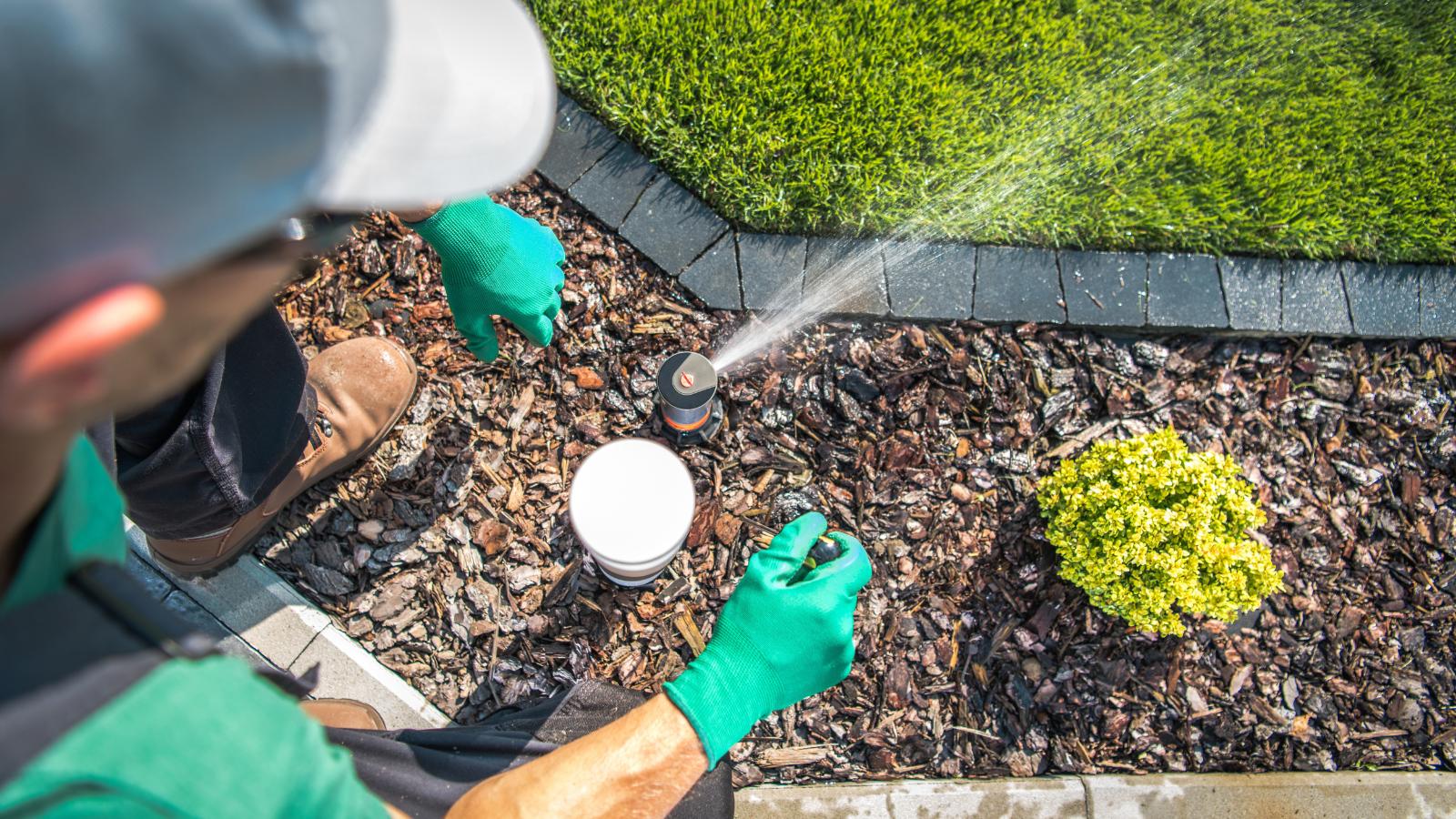
Florida’s changing weather creates unique irrigation challenges for homeowners. Warm temperatures, intense sunlight, periods of limited rainfall, tropical storms, and seasonal downpours can dramatically change how much water a landscape needs. A sprinkler schedule that works during a dry month may cause oversaturation and runoff during the rainy season.
Instead of operating the same schedule throughout the year, homeowners should review sprinkler run times, watering frequency, coverage, and system performance whenever the weather changes.
Why Seasonal Sprinkler Adjustments Matter
Landscape watering needs are not constant. Temperature, humidity, rainfall, wind, plant growth, and soil conditions influence how quickly water leaves the soil and how much irrigation is necessary.
If a sprinkler system operates too frequently, the landscape may develop:
- Standing water
- Fungal growth
- Root problems
- Soil erosion
- Runoff onto pavement
- Excessive weed growth
- High water bills
- Nutrient loss
- Yellowing grass or plants
Insufficient watering can cause dry patches, wilting, slow plant growth, and stress. Proper seasonal sprinkler adjustments Florida homeowners make should balance current weather conditions with the needs of the lawn and landscape.
Understand Florida’s Dry and Rainy Seasons
South Florida generally experiences a wetter season and a drier season, although actual rainfall can vary from year to year. Irrigation schedules should respond to observed conditions rather than calendar dates alone.
During the dry season, landscapes may depend more heavily on supplemental irrigation. During the rainy season, natural rainfall may provide enough moisture for extended periods.
Homeowners should regularly consider:
- Recent rainfall
- Upcoming weather
- Soil moisture
- Plant appearance
- Turf condition
- Sun and shade exposure
- Local watering restrictions
- New landscaping
- Drainage conditions
Effective seasonal sprinkler adjustments Florida properties require should be based on what is happening in the landscape—not simply on settings used during the previous year.
Spring Sprinkler Adjustments
Spring can bring warmer temperatures and changing rainfall patterns. This is a good time to inspect the complete irrigation system before hotter conditions increase landscape water demand.
Run each zone individually and look for:
- Broken or missing sprinkler heads
- Clogged nozzles
- Weak spray patterns
- Tilted or sunken heads
- Water spraying onto pavement
- Leaking valves or pipes
- Grass blocking the spray
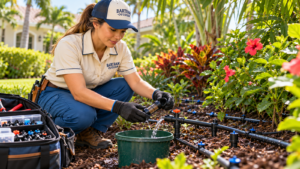
- Drip lines that have become disconnected
- Zones that fail to start or stop
After confirming that the system works correctly, review the controller schedule. Avoid increasing watering time to compensate for a broken head, clogged nozzle, or poor coverage. Repairing the underlying problem is usually more effective.
Spring seasonal sprinkler adjustments Florida homeowners complete may include correcting spray direction, trimming vegetation around heads, testing the rain sensor, and updating controller settings.
Summer and Rainy-Season Adjustments
Florida summers often bring high temperatures, humidity, thunderstorms, and periods of heavy rainfall. Landscapes may appear dry during the heat of the day even when the soil contains adequate moisture.
During rainy periods, homeowners may need to reduce sprinkler frequency or temporarily suspend scheduled irrigation. Watering already-saturated soil wastes water and may contribute to landscape problems.
Watch for signs of overwatering, including:
- Puddles that remain long after watering
- Water flowing into the street
- Mushy or constantly damp soil
- Fungal activity
- Yellow grass
- Plant decline
- Soil washing away
- Water collecting near paved areas
Summer seasonal sprinkler adjustments Florida landscapes benefit from should include testing the rain sensor. A functioning sensor can interrupt scheduled watering after sufficient rainfall. If the sprinklers continue to operate during or immediately after heavy rain, the sensor, controller settings, wiring, or communication connection may need professional attention.
Adjust the System After Tropical Storms
Tropical storms and hurricanes can damage sprinkler systems even when the equipment is mostly underground. Wind, flooding, falling branches, and cleanup work can affect exposed components.
After severe weather, inspect:
- Sprinkler heads
- Valve boxes
- Drip tubing
- Controller enclosures
- Rain sensors
- Above-ground pipes
- Wiring
- Backflow components
- Pump equipment
- Areas disturbed by fallen trees
Do not operate electrical irrigation equipment if it appears wet, damaged, or unsafe. Arrange professional service when the condition of the system is uncertain.
Post-storm seasonal sprinkler adjustments Florida homeowners make should begin with a complete system test. Each zone should activate, provide consistent coverage, and shut off correctly before normal programming resumes.
Fall Irrigation Adjustments
Fall is a useful time to evaluate how the sprinkler system performed during the rainy season. As rainfall patterns begin to change, the landscape may require more supplemental irrigation, but watering should be increased gradually.
Homeowners should check the soil and plant condition before extending run times. Shaded areas may retain moisture longer than sunny parts of the yard, while sandy soil may drain more quickly.
Fall maintenance should include:
- Testing every irrigation zone
- Checking sprinkler alignment
- Clearing clogged nozzles
- Inspecting for storm damage
- Reviewing controller start times
- Examining drip emitters
- Testing the rain sensor
- Looking for hidden leaks
- Confirming local watering days
These seasonal sprinkler adjustments Florida properties need can prepare the system for drier weather while preventing unnecessary watering.
Winter Watering in South Florida
South Florida winters are usually mild, but lower temperatures and slower plant growth can reduce water demand. Continuing to use summer settings may provide more water than the landscape needs.
Winter adjustments may involve:
- Reducing zone run times
- Reducing watering frequency
- Monitoring soil moisture
- Separating turf and plant needs
- Checking newly installed landscaping
- Inspecting exposed equipment after cold weather
- Reviewing the schedule after rainfall
Different plants respond to cooler weather in different ways. Established shrubs may need less frequent irrigation than turf, annual flowers, or recently planted trees.
Appropriate winter seasonal sprinkler adjustments Florida homeowners follow can help prevent overwatering while maintaining healthy landscaping.
Adjust Run Times by Zone
Every irrigation zone does not necessarily need the same run time. Zones may contain different sprinkler heads, plants, soil conditions, and levels of sun exposure.
For example:
- A shaded lawn may retain moisture longer.
- A sunny area may dry more quickly.
- Shrub beds may use drip irrigation.
- Newly planted areas may require specialized scheduling.
- Sloped ground may experience runoff.
- Rotating sprinklers may apply water differently from spray heads.
Each zone should be evaluated individually. Increasing the entire system’s watering time because one area looks dry may cause other parts of the property to receive too much water.
Professional seasonal sprinkler adjustments Florida service can help identify whether a dry area needs additional watering or whether the actual problem is poor coverage, low pressure, or a damaged component.
Check for Multiple Start Times
Many irrigation controllers allow several start times. This feature can be helpful in certain situations, but it can also lead to accidental overwatering.
A homeowner may program a morning start time without realizing that additional start times are still active. The entire watering schedule may then repeat several times.
When reviewing the controller, check:
- Current date and time
- Active programs
- Watering days
- Zone run times
- Start times
- Seasonal adjustment percentage
- Rain delay settings
- Sensor settings
- Error messages
- Backup battery condition
Controller reviews are an essential part of seasonal sprinkler adjustments Florida homeowners can perform because programming errors may not be visible in the landscape immediately.
Inspect Coverage Before Increasing Watering
Dry spots do not always mean the landscape needs a longer watering schedule. A broken head, clogged nozzle, blocked spray, poor pressure, or incorrect sprinkler angle may be responsible.
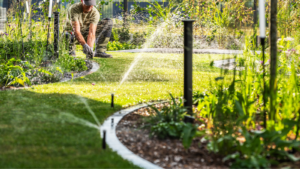
Run the affected zone and observe how water is distributed. Look for areas where sprinklers fail to overlap correctly or where vegetation blocks the spray.
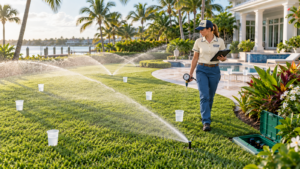
A catch-cup test can provide more information. Identical containers are placed throughout the watering area, and the zone is run for a measured period. The amount of water collected in each container reveals whether distribution is reasonably even.
Coverage testing helps make seasonal sprinkler adjustments Florida systems need more accurate. It allows the source of dry areas to be addressed without automatically increasing water use.
Adjust Drip Irrigation for Seasonal Conditions
Drip irrigation delivers water close to plant roots and can be useful for gardens, shrubs, trees, and planting beds. However, drip systems still require seasonal inspection and adjustment.
Check for:
- Clogged emitters
- Disconnected tubing
- Damaged lines
- Missing end caps
- Leaks at fittings
- Emitters located too far from growing roots
- Tubing exposed by erosion
- Plants that have outgrown the original layout
As plants mature, their root systems and watering needs may change. Emitters may need to be repositioned, replaced, or added. Avoid extending run times until the system has been inspected for clogs and poor placement.
Including drip irrigation in seasonal sprinkler adjustments Florida planning helps maintain targeted watering throughout the property.
Follow Local Watering Restrictions
Florida watering rules may vary by municipality, county, water management district, and current drought conditions. Restrictions may establish approved watering days, hours, or exceptions.
Homeowners should confirm the current requirements for their location before changing the controller. Do not assume that an older schedule remains compliant.
Local rules may provide limited exceptions for new landscaping, irrigation testing, hand watering, or necessary repairs. Verify the requirements before relying on an exception.
Following applicable regulations should be part of every plan for seasonal sprinkler adjustments Florida homeowners implement.
When to Call an Irrigation Professional
Basic controller reviews and visual inspections can be helpful, but some conditions require professional diagnosis.
Contact an irrigation professional if you notice:
- Recurring dry or oversaturated areas
- Low water pressure
- Continuous water flow
- Underground leaks
- Zones that do not operate
- Valves that remain open
- Damaged wiring
- Controller failures
- Significant storm damage
- Repeatedly clogged nozzles
- Poor coverage across multiple zones
- A system that no longer fits the landscape
A professional can determine whether the problem involves programming, pressure, equipment damage, system design, or the water supply.
Schedule Seasonal Sprinkler Service With Bartram Outdoor
Seasonal irrigation changes help a sprinkler system respond to Florida’s shifting rainfall, temperatures, and landscape needs. Homeowners should inspect every zone, test the rain sensor, review controller settings, correct coverage problems, and adjust watering based on actual soil and plant conditions.
At Bartram Outdoor, we help homeowners throughout Palm Beach County and Florida’s Space Coast maintain dependable irrigation systems. Our team can inspect sprinkler heads, valves, wiring, drip lines, controllers, and overall water distribution.