
South Florida landscapes face intense sun, heavy rain, sandy soils, tropical storms, and periods of dry weather. These conditions can place significant demands on residential irrigation systems. Without routine maintenance, homeowners may experience broken sprinkler heads, poor coverage, high water bills, dry patches, and unnecessary runoff.
Why Seasonal Sprinkler Maintenance Matters in Florida
An irrigation system’s needs change with the seasons. During dry periods, lawns and plants may depend heavily on scheduled watering. During the rainy season, the same schedule can oversaturate the soil and waste water.
Plant growth also affects sprinkler performance. Grass, shrubs, and ground cover may block spray patterns as they mature. Soil movement, landscaping work, lawn equipment, and storm debris can damage or shift sprinkler heads.
A seasonal sprinkler maintenance checklist Florida homeowners follow should account for weather, plant needs, local watering restrictions, and the condition of every irrigation zone. Regular inspections can improve coverage, limit runoff, and help protect the landscape.
Spring Sprinkler Maintenance Checklist Florida Homeowners Can Follow
Spring is an important time to prepare an irrigation system for warmer weather and changing rainfall patterns.
Inspect Every Sprinkler Head
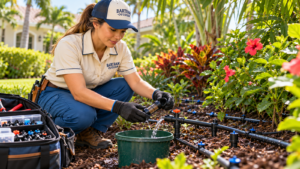
Run each irrigation zone separately and observe every head. Look for sprinklers that are:
- Broken or cracked
- Tilted or sunken
- Blocked by grass
- Spraying the driveway or street
- Producing a weak or uneven pattern
- Leaking around the base
- Failing to rise or retract
Damaged heads should be repaired or replaced with compatible components. Mixing heads with substantially different precipitation rates within one zone may create uneven watering.
Clean Clogged Nozzles and Filters
Sand, mineral buildup, and small debris can restrict sprinkler nozzles. A clogged nozzle may create a weak stream or leave part of the lawn dry.
Turn off the system before removing or cleaning components. If clogging happens repeatedly, the system may need a broader evaluation to identify damaged filters, contaminated water, or another underlying cause.
Adjust Spray Patterns
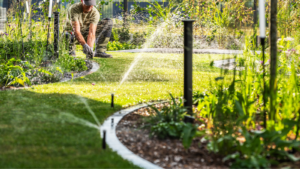
Sprinklers should water plants and soil rather than pavement, fences, walls, or outdoor furniture. Adjust the direction and distance of each spray pattern so water remains within the intended landscape area.
This step is especially important after mowing, edging, planting, or other yard work. Even a small shift in a sprinkler head can direct substantial water away from the landscape.
Review the Controller
Check the date, time, watering days, start times, and run times. Power interruptions or accidental programming changes can alter the schedule.
A good sprinkler maintenance checklist Florida homeowners use should include controller testing at the beginning of every major season.
Summer and Rainy-Season Irrigation Maintenance
South Florida’s summer weather can bring heat, humidity, frequent rain, and tropical storms. Irrigation schedules should respond to actual landscape conditions rather than operating automatically without review.
Test the Rain Sensor
A functioning rain sensor can interrupt scheduled irrigation after sufficient rainfall. Test the device according to the manufacturer’s instructions and check that plants, rooflines, or other objects do not block it.
If the system continues running during or immediately after heavy rain, the sensor, wiring, controller settings, or communication connection may require attention.
Reduce Unnecessary Watering
Rainfall may supply much of the water a landscape needs during wet periods. Adjusting run times or using seasonal programming can help prevent oversaturation.
Signs of excessive watering may include:
- Standing water
- Constantly wet soil
- Fungal growth
- Yellowing plants
- Soil erosion
- Water flowing into the street
- Spongy lawn areas
The correct watering schedule depends on plant type, sun exposure, soil conditions, recent rainfall, and local regulations.
Check for Storm Damage
Wind, falling branches, flooding, and cleanup activities can damage sprinkler equipment. After severe weather, inspect exposed heads, valve boxes, wiring, controllers, and backflow components.
Do not use electrical irrigation equipment if it appears wet or damaged. Arrange professional service when safety or system integrity is uncertain.
Including a storm inspection in your sprinkler maintenance checklist Florida plan helps uncover damage before the next scheduled watering cycle.
Fall Sprinkler Maintenance Checklist Florida Landscapes Need
Fall may bring changing rainfall and slightly cooler conditions. It is a good time to evaluate how the system performed during summer and correct recurring problems.
Check Every Irrigation Zone
Activate each zone and confirm that it starts, runs, and shuts off correctly. A zone that will not operate may have a valve, wire, solenoid, controller, or water-supply problem.
A zone that stays on after the program ends also needs attention. Continuous watering can damage plants, waste water, and contribute to drainage problems.
Look for Hidden Leaks
Not every irrigation leak produces an obvious spray. Watch for:
- Unusually green patches
- Soggy soil
- Erosion near sprinkler heads
- Water bubbling from the ground
- Low pressure across one zone
- A water meter that moves unexpectedly
- Higher water use without a clear cause
Underground pipe or fitting leaks may require professional troubleshooting to locate and repair correctly.
Evaluate Plant Growth
Shrubs and ground cover can block sprinkler streams as they grow. Trim vegetation when appropriate or adjust the irrigation design if the plants have outgrown the original layout.
Avoid simply increasing watering time to compensate for blocked coverage. Doing so may oversaturate accessible areas while the obstructed section remains dry.
Examine Drip Irrigation
If the landscape includes drip tubing or micro-irrigation, check for disconnected lines, damaged emitters, clogged outlets, and tubing exposed by erosion or landscaping work.
Emitters should deliver water near the intended plant roots. As plants mature, their watering needs and root zones may change.
Winter Sprinkler Maintenance in South Florida
South Florida winters are generally mild, but landscapes may require less irrigation during cooler or less active growing periods.
Adjust Seasonal Run Times
Review the schedule instead of allowing summer settings to continue throughout winter. Lower temperatures and reduced plant growth can decrease water demand.
Seasonal adjustments should be based on actual site conditions. Shaded areas, established plants, new landscaping, turf, and container gardens may have different requirements.
Inspect for Cold-Weather Damage
Although extended freezes are uncommon in many South Florida communities, occasional cold weather can still affect exposed irrigation parts. Inspect above-ground pipes, valves, backflow components, and other vulnerable equipment after unusually low temperatures.
Do not operate visibly cracked or damaged components until they have been evaluated.
Review Watering Coverage
Winter is a useful time to observe whether the system is still aligned with the landscape design. Renovations, new patios, plant replacements, tree growth, and additions may have changed the areas requiring irrigation.
Updating the sprinkler maintenance checklist Florida homeowners follow can help ensure the system continues serving the current landscape rather than an outdated design.
Monthly Sprinkler Maintenance Tasks
Seasonal inspections are valuable, but several quick checks should be completed more frequently.
Once a month, homeowners should:
- Run every zone manually
- Look for damaged sprinkler heads
- Check for overspray and runoff
- Confirm that nozzles are clear
- Inspect drip lines and emitters
- Review the controller display
- Check recent rainfall
- Look for unusually wet or dry areas
- Remove grass blocking sprinkler heads
- Verify that valve boxes remain accessible
A monthly visual inspection may reveal problems before they affect a large portion of the lawn.
Check Irrigation Coverage With Catch Cups
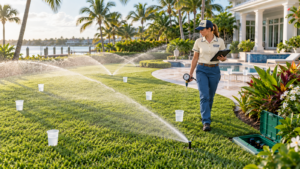
A lawn can look evenly watered while receiving significantly different amounts across the zone. A simple catch-cup test can help identify inconsistencies.
Place several identical containers throughout the watering area. Run the zone for a set period, then compare the water collected in each container. Large differences may indicate blocked heads, incorrect spacing, poor pressure, mismatched nozzles, or improper adjustment.
A professional can use the results to determine whether the problem requires nozzle adjustments, pressure correction, repositioning, or redesign.
This test can make a sprinkler maintenance checklist Florida program more accurate because it measures actual distribution instead of relying only on visual observation.
Monitor Water Pressure
Water pressure that is too low can prevent sprinklers from reaching their intended areas. Excessive pressure may create misting, uneven distribution, and premature component wear.
Possible signs of low pressure include:
- Short spray distance
- Heads that do not rise completely
- Weak rotating sprinklers
- Several dry areas within one zone
- Poor performance when multiple heads operate
High-pressure symptoms may include excessive misting, fine airborne droplets, and water drifting away from the target area.
Pressure problems can result from leaks, valve issues, clogged components, improper zone design, supply limitations, or missing pressure regulation. Professional testing can identify the cause.
Include the Controller and Wiring
The irrigation controller is the system’s command center. Even when sprinklers and pipes are in good condition, incorrect programming or damaged wiring can prevent proper operation.
Review:
- Current date and time
- Approved watering days
- Start times
- Zone run times
- Seasonal adjustment settings
- Rain-sensor settings
- Backup battery condition
- Error messages
- Loose or damaged wires
- Outdoor enclosure condition
Multiple start times are a common source of accidental overwatering. A homeowner may intend to water once but unknowingly program the entire schedule to repeat.
The controller section of a sprinkler maintenance checklist Florida guide should be reviewed whenever water use changes unexpectedly.
Follow Local Watering Requirements
Watering restrictions and approved schedules can vary by location and may change during droughts or other conditions. Homeowners should verify the current rules for their municipality, county, or water management district.
Controller settings should comply with applicable watering days and hours. Some exceptions may apply to new landscaping, system testing, hand watering, or repairs, but homeowners should confirm the current requirements rather than assume an exception is available.
Following local requirements helps conserve water and reduces the risk of avoidable violations.
Know When Professional Sprinkler Service Is Needed
Homeowners can complete basic observations and minor cleaning, but some problems require professional diagnosis.
Contact an irrigation professional when you notice:
- Recurring low pressure
- Underground leaks
- Zones that will not activate
- Valves that remain open
- Damaged wiring
- Controller failures
- Repeatedly clogged nozzles
- Poor coverage across several areas
- Backflow component concerns
- Water flowing continuously
- Significant storm damage
- A system that no longer matches the landscape
A professional evaluation can determine whether the issue involves a single component or a larger design problem.
Complete Sprinkler Maintenance Checklist Florida Homeowners Can Save
Use this condensed checklist throughout the year:
Every Month
- Run and observe every zone.
- Check for leaks and broken heads.
- Correct overspray.
- Clear blocked nozzles.
- Inspect drip lines.
- Review controller settings.
Before the Dry Season
- Test water coverage.
- Adjust run times.
- Inspect pressure.
- Repair damaged components.
- Confirm watering days.
- Evaluate newly planted areas.
During the Rainy Season
- Test the rain sensor.
- Reduce unnecessary watering.
- Watch for standing water.
- Inspect the system after storms.
- Check drainage and runoff.
During Cooler Months
- Reduce watering when appropriate.
- Inspect exposed components.
- Review plant and turf needs.
- Plan repairs or system updates.
- Confirm that the design still fits the landscape.
Following this sprinkler maintenance checklist Florida homeowners can use year-round supports more efficient watering and healthier landscaping.
Schedule Sprinkler Maintenance With Bartram Outdoor
A properly maintained irrigation system should deliver water evenly, respond to seasonal conditions, and minimize waste. Regular inspections make it easier to find damaged heads, clogged nozzles, wiring problems, leaks, poor pressure, and controller errors before they become larger concerns.
At Bartram Outdoor, we help homeowners throughout Palm Beach County and Florida’s Space Coast maintain irrigation systems suited to South Florida conditions. Our team can inspect system performance, identify damaged components, adjust coverage, and recommend improvements based on the needs of your landscape.