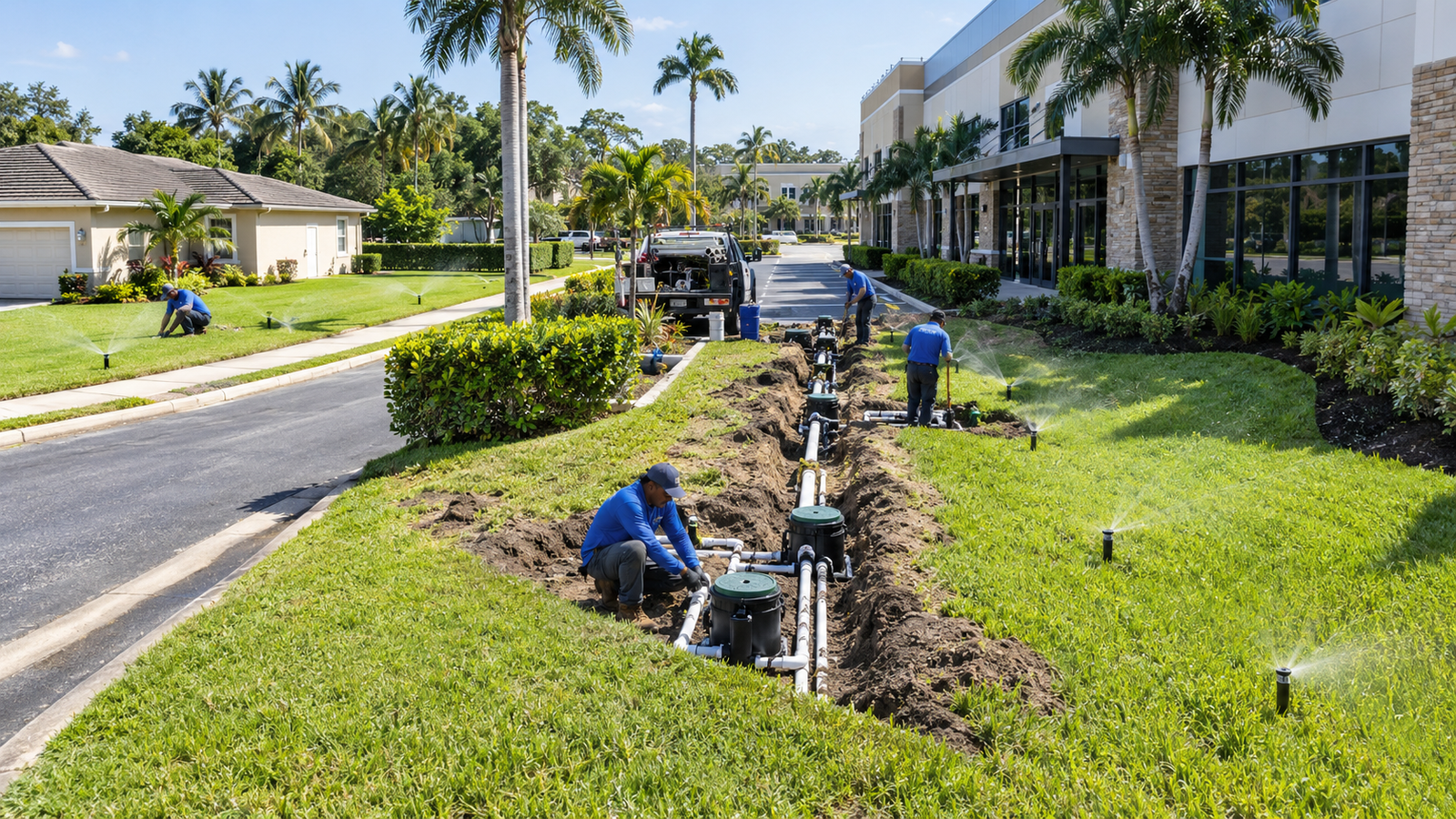
A sprinkler system for a home lawn and one for a commercial property may use similar equipment, but they are planned for different spaces and operating demands. A homeowner may need to water a front lawn, a few planting beds, and a backyard. A business might need to cover larger lawns, entry landscaping, parking-lot islands, and areas used by customers or staff.
Commercial Sprinkler Installation Florida: Start With the Property
Residential irrigation usually begins with the homeowner’s landscape plan. The design accounts for grass, gardens, shrubs, trees, patios, and walkways. It should also consider how the family uses the yard. A sprinkler that waters a play area at the wrong time can be inconvenient even if its coverage is technically adequate.
Commercial properties often contain more separate landscape areas. A retail site, for example, may have narrow planting strips beside pavement and a larger lawn elsewhere. Those spaces may need different equipment and schedules. Foot traffic, visibility, and business hours also influence where components should go.
The design for commercial sprinkler installation Florida property managers request therefore needs a detailed site review. A system cannot be scaled up successfully by simply adding more sprinkler heads to a residential layout.
Zone Design Becomes More Complex
An irrigation zone is a group of sprinklers or other watering devices that runs together. In a home system, zones might separate the front lawn, backyard, and planting beds. This lets the homeowner adjust watering without treating every part of the property the same way.
A commercial system may need more zones because the landscape is larger and more varied. Sunny lawns, shaded areas, shrubs, and narrow strips near pavement may have different needs. Separating unlike areas can make scheduling more precise and help avoid watering a bed simply because a nearby lawn needs water.
Thoughtful zoning matters in both settings. Florida-Friendly Landscaping design guidance recommends matching irrigation to the conditions and needs of the landscape. That principle becomes especially important for commercial sprinkler installation Florida sites with several distinct planting areas. University of Florida IFAS design standards provide further guidance.
Water Supply Determines the Layout
Before selecting sprinkler heads, an installer needs to understand the available water supply. Pressure and flow affect how much equipment can operate on a zone and whether water will reach the intended areas.
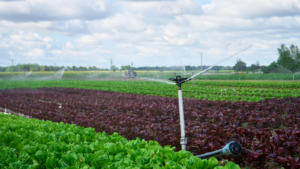
A residential lot may have relatively modest watering demands. A commercial landscape may require a more extensive evaluation of its water source, piping layout, and total demand. Larger areas do not necessarily mean running everything at once; properly designed zones divide the work into manageable sections.
For commercial sprinkler installation Florida property owners are considering, the water supply should be measured before the layout is finalized. The same is true for a home. A plan that looks balanced on paper will not perform as intended if it assumes more flow or pressure than the property can provide.
Connection details, including appropriate backflow protection, should be discussed with a qualified installer and addressed according to the requirements that apply to the property.
Equipment Must Fit the Area Being Watered
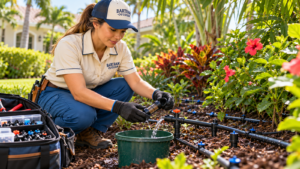
Sprinkler heads are selected for the shape and size of an area. A broad lawn may call for a different approach from a narrow strip of grass or a flower bed. Drip irrigation may be suitable for some planting areas where directing water near the plants makes sense.
At a home, equipment placement should also account for driveways, windows, patios, and future plant growth. On a commercial property, the design may need to account for entrances, sidewalks, parking areas, and landscaping that borders heavily used spaces.
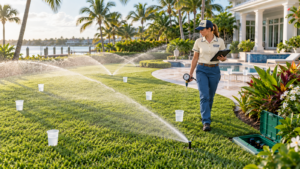
One goal of commercial sprinkler installation Florida businesses invest in is to water plants without regularly spraying people or pavement. Good placement also matters at home: no homeowner wants a sprinkler soaking the front walkway each morning.
The installer should explain why each type of equipment is proposed and how its coverage will be checked after installation.
Controllers and Schedules Serve Different Routines
A home irrigation controller should be easy for the homeowner to understand and adjust. You should know how to pause the system, change a schedule, and run a zone for inspection.
Commercial controllers may manage more zones and a more complicated routine. Watering might need to occur around opening hours, maintenance visits, and public use of the property. The person responsible for the system may also differ from the property owner.
For both residential and commercial sprinkler installation Florida landscapes need schedules that respond to conditions rather than running unchanged all year. Weather-aware controls and rain-sensing features can be useful, but they still need appropriate setup and periodic checks. The EPA’s irrigation guidance emphasizes scheduling, equipment maintenance, and monitoring water use as parts of efficient operation.
Installation Timing and Site Access
A home irrigation installation may be coordinated with new landscaping, a patio project, or home construction. Pipe routes should be planned before finished surfaces make access difficult.
Commercial work may require coordination with a general contractor, landscape installer, property manager, or business operator. The crew may need to keep entrances accessible and protect areas used by customers. Phasing the work can be as important as the equipment design.
When planning commercial sprinkler installation Florida project teams should identify utilities, paved surfaces, drainage features, and future construction before work begins. Homeowners benefit from the same habit on a smaller scale. Tell your installer about the shed, fence, pool, or garden you expect to add later.
Maintenance Needs Differ, but Neither System Is Set-and-Forget
A homeowner can often notice a dry patch, broken head, or unusually wet area during everyday use of the yard. Commercial problems may be less obvious to the person responsible for arranging repairs, especially when landscaping extends around a large site.
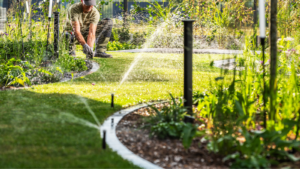
Both systems need periodic zone checks. Sprinkler heads can become blocked or misaligned, plants can grow into spray patterns, and leaks can develop. A commercial maintenance plan may need documented checks across many zones and a clear process for reporting problems.
For commercial sprinkler installation Florida businesses depend on, access to valves, controllers, and other components should be considered during design. Homeowners should ask for a system walkthrough and a record of zone locations for the same reason.
What Should a Homeowner Take From the Comparison?
You probably do not need a commercial-size system for a residential yard. You do benefit from the same planning principles: measure the water supply, group areas with similar needs, select equipment for the space, and make maintenance access straightforward.
If your home sits on a large lot, includes extensive planting, or has landscaping installed in stages, some design questions associated with commercial sprinkler installation Florida properties may also apply to you. The answer is a system tailored to your property, not one chosen by property type alone.