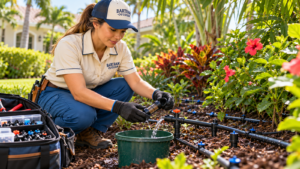
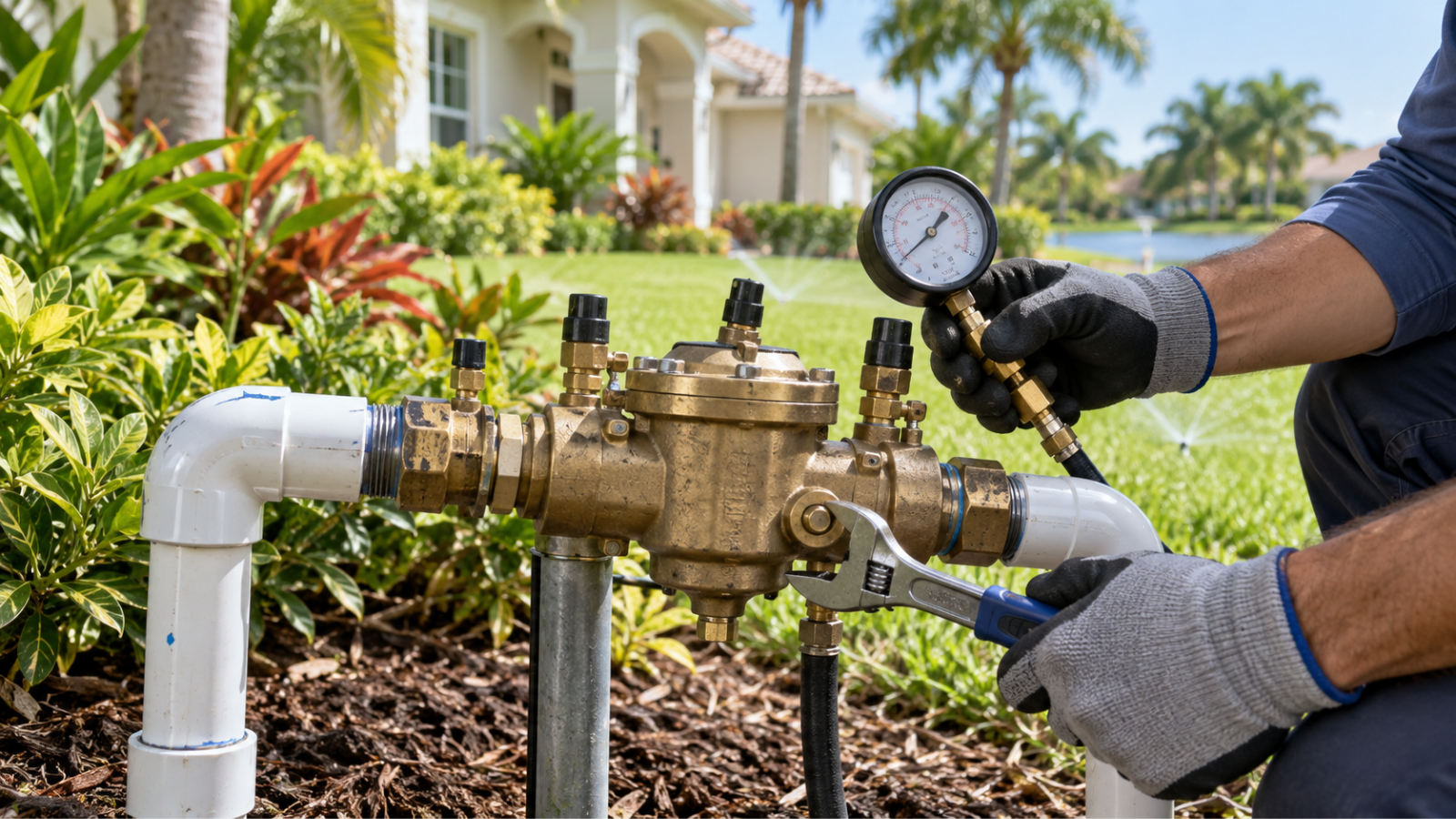
A residential irrigation system is designed to move water outward toward lawns, gardens, and planting beds. Under certain pressure conditions, however, water can attempt to flow in the opposite direction. A properly functioning backflow prevention device helps stop irrigation water from returning to the home’s clean water supply.
What Is an Irrigation Backflow Prevention Device?
A backflow prevention device is installed between an irrigation system and its water source. Its purpose is to allow water to move toward the irrigation zones while preventing reverse flow.
Backflow can occur when water pressure changes unexpectedly. Backpressure happens when the pressure inside the irrigation system becomes greater than the pressure in the supply line. Backsiphonage occurs when pressure in the supply line drops and creates a vacuum-like effect.
These conditions may develop because of a water main interruption, firefighting activity, a broken pipe, or another change in the plumbing system. Routine backflow device maintenance Florida services help confirm that the device’s valves, seals, springs, and related components are operating as intended.
Why Backflow Prevention Matters for Florida Homes
Irrigation water can come into contact with soil, fertilizer, pesticides, animal waste, insects, and landscaping debris. If water from the irrigation system reverses direction, those materials could potentially enter connected water lines.
A working backflow prevention device creates an important barrier between the irrigation network and the water supply. Because this component often remains outdoors throughout the year, it is exposed to sunlight, rain, humidity, temperature changes, landscaping activity, and normal wear.
Professional backflow device maintenance Florida homeowners schedule regularly can help identify developing problems before the device fails or begins leaking heavily.
Signs Your Backflow Device May Need Repair
Some backflow problems are easy to notice, while others require professional testing or inspection. Water spraying or dripping from the device is one of the most common warning signs. A small amount of temporary discharge may occur under certain operating conditions, but persistent leakage should be evaluated.
Homeowners should also watch for:
- Visible cracks or corrosion
- Damaged or loose fittings
- Unusual pressure changes
- Reduced sprinkler performance
- Water pooling around the device
- Irrigation zones that do not operate correctly
- Unusual noises when the system starts or stops
- A device that has shifted, tilted, or been struck
These symptoms do not always mean the entire assembly must be replaced. A professional providing backflow device maintenance Florida services can inspect the system, locate the source of the problem, and recommend an appropriate repair.
What Backflow Device Maintenance Florida Includes
Maintenance should begin with a visual inspection of the assembly and surrounding area. The technician looks for signs of corrosion, cracks, leaks, loose connections, physical damage, and improper positioning.
The device may contain check valves, shutoff valves, relief valves, springs, seals, test ports, and other internal parts. These components can wear out or collect debris over time. Depending on the device and its condition, maintenance may involve cleaning internal components, replacing worn rubber parts, tightening connections, repairing leaks, or installing a replacement assembly.
Pressure and performance testing may also be necessary. Testing helps determine whether the device is maintaining the required separation between the irrigation system and the supply line. Requirements can vary by device type, property, and local authority, so homeowners should work with qualified professionals familiar with applicable procedures.
Consistent backflow device maintenance Florida service helps keep this important irrigation component in dependable condition.
Common Causes of Backflow Device Damage
Florida’s climate can be demanding on outdoor irrigation equipment. Strong sunlight can affect exposed plastic and rubber components, while heat and humidity may contribute to faster deterioration. Heavy rainfall can also cause erosion or movement around the piping.
Landscape maintenance is another common source of damage. Lawn equipment, pruning tools, vehicles, falling branches, and construction work can strike exposed assemblies. Even a minor impact may crack a fitting or place stress on connected pipes.
Sediment and mineral buildup can interfere with internal valves and seals. Changes in water pressure may also place additional strain on the assembly. When homeowners postpone backflow device maintenance Florida inspections, small problems can develop into larger leaks or system failures.
Repairing Versus Replacing a Backflow Device
Whether a backflow prevention device should be repaired or replaced depends on its age, condition, design, and the extent of the damage. A leaking seal or worn internal component may be repairable when the device body remains in good condition.
Replacement may be more practical when the assembly is severely corroded, cracked, physically damaged, improperly sized, or no longer dependable. Repeated repair needs may also indicate that replacement would provide better long-term value.
The connected piping should be inspected as well. Replacing the device without correcting damaged supports, unstable pipes, excessive pressure, or poor positioning may allow the problem to return.
Professional backflow device maintenance Florida technicians can explain the available options and help homeowners make an informed decision based on the system’s condition.
Why DIY Backflow Repair Can Be Risky
Backflow prevention devices are more complex than ordinary hose connections. Incorrect disassembly, installation, or adjustment may prevent the device from operating correctly. A repair can appear successful because a leak has stopped while the internal protection remains compromised.
Shutting off or reopening valves incorrectly can also create pressure problems elsewhere in the irrigation system. Replacement parts must match the device, and components should be installed in the correct direction and sequence.
Homeowners can visually monitor the assembly and keep the surrounding area clear, but testing and internal repairs should be handled by qualified professionals. Choosing professional backflow device maintenance Florida service provides a more reliable assessment of the entire assembly.
How Often Should the Device Be Inspected?
Homeowners should visually check exposed irrigation equipment throughout the year, especially after storms, landscape renovations, plumbing work, or noticeable pressure changes. Look for active leaks, cracked fittings, corrosion, soil movement, and physical damage.
Professional inspection frequency may depend on the device, water provider, local requirements, and property conditions. Some assemblies may require periodic testing by an appropriately qualified professional. Homeowners should confirm current requirements with their local water authority or service provider.
Adding backflow device maintenance Florida service to a broader irrigation maintenance plan can make it easier to address valves, sprinkler heads, controllers, drip lines, and pressure concerns during the same visit.
Protecting Your Backflow Prevention Assembly
The area around the device should remain accessible for inspection and service. Avoid allowing shrubs, roots, mulch, or stored items to cover the assembly. If protective housing is used, it should provide appropriate access and should not interfere with operation.
Homeowners should never block a relief opening or attempt to stop discharge by sealing it. Water release may indicate debris, pressure fluctuation, worn parts, or a device problem that needs professional attention.
If a leak appears suddenly, shut down the irrigation system when it is safe to do so and arrange an evaluation. Prompt backflow device maintenance Florida service can help reduce water waste and prevent additional damage to the assembly or nearby landscaping.
Schedule Backflow Device Service with Bartram Outdoor
Backflow prevention equipment is a small but important part of a residential irrigation system. Regular inspections can reveal leaks, worn seals, damaged valves, corrosion, and pressure concerns before they become more disruptive.
If you notice leaking, damaged piping, pressure changes, or inconsistent irrigation performance, do not ignore the warning signs. Contact Bartram Outdoor today to schedule backflow device maintenance Florida homeowners can trust and keep your irrigation system working efficiently.