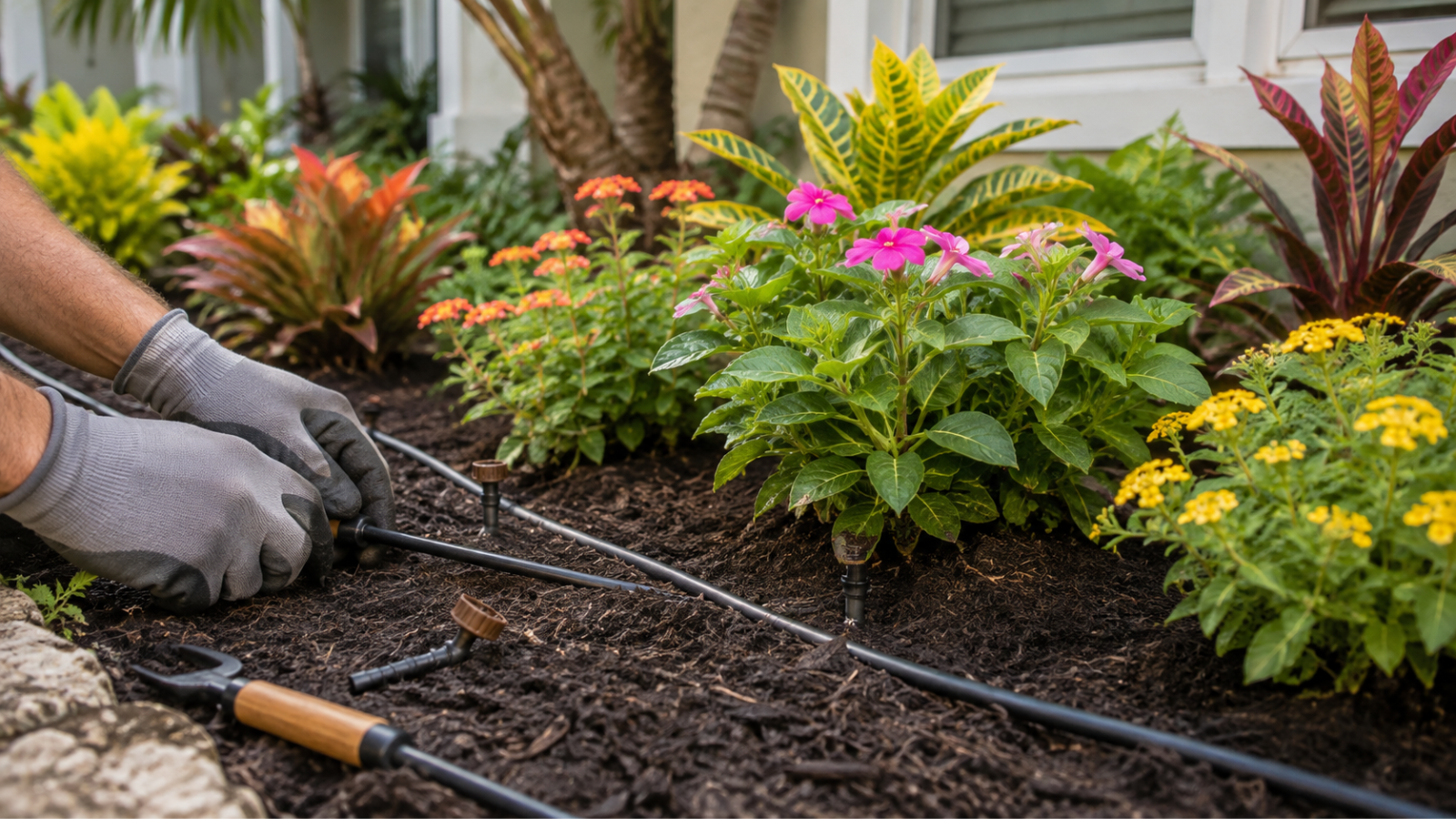
Keeping flower beds and garden areas healthy in South Florida requires consistent watering, but traditional sprinklers are not always the most efficient choice. Spray heads can lose water to wind and evaporation, wet plant leaves unnecessarily, and send runoff onto sidewalks or driveways. A properly planned drip irrigation installation Florida homeowners can rely on delivers water slowly and directly to the root zone.
Why Choose Drip Irrigation for Garden Beds?
Drip irrigation uses flexible tubing and small emitters to release water near individual plants. Instead of spraying a large area, the system applies moisture where roots can absorb it. This targeted approach can reduce evaporation, overspray, runoff, and weed growth between plants.
A thoughtful drip irrigation installation Florida landscapes can support is especially useful for flower beds, vegetable gardens, foundation plantings, shrubs, containers, and narrow landscaped spaces. It can also help keep foliage drier, which may reduce conditions that encourage certain fungal problems.
Plan Your Drip Irrigation Installation Florida Layout
Successful installation begins with a clear plan. Measure the planting area and note the location of each plant, water source, valve, walkway, and hardscape edge. Group plants according to similar watering needs whenever possible. Drought-tolerant shrubs should not share the same watering pattern as thirsty annual flowers.
Sketch the route for the main supply tubing and smaller distribution lines. The layout should provide convenient access for maintenance without creating trip hazards or leaving tubing exposed to lawn equipment. Planning a drip irrigation installation Florida homeowners can maintain easily helps prevent uneven watering and unnecessary future changes.
Evaluate Water Pressure and Flow
Drip components operate within specific pressure and flow ranges. Excessive pressure can separate fittings or damage emitters, while insufficient pressure may prevent water from reaching the end of a line. A pressure regulator is often needed to protect the system and maintain predictable output.
Available flow also determines how many emitters can operate on one zone. Adding too many devices may cause inconsistent watering. Before beginning a drip irrigation installation Florida homeowners should verify the capacity of the water source and choose tubing, filters, regulators, and emitters designed to work together.
Match Emitters to Plants and Soil
One emitter is not automatically enough for every plant. Small flowers may need limited water close to the stem, while established shrubs often benefit from multiple emitters placed around the root zone. As plants grow, emitters may need to be moved outward or added to cover expanding roots.
Soil type also affects spacing. Water may spread differently through sandy soil than through soil containing more organic matter. Because many Florida landscapes drain quickly, short and properly scheduled watering cycles may be more effective than excessive application. A professional drip irrigation installation Florida plan accounts for both plant demand and soil behavior.
Flush and Test the System Before Finishing
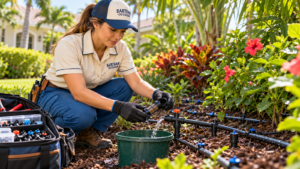
New tubing may contain dirt or small plastic particles from cutting and assembly. Before installing end caps, open the line and allow water to flush out debris. Then close the ends, activate the zone, and inspect every connection and emitter.
Look for leaks, loose fittings, blocked devices, and areas receiving too much or too little water. Confirm that moisture reaches the intended root zones rather than collecting against plant stems or the building foundation. Testing is a critical part of drip irrigation installation Florida projects because small problems are easier to correct before mulch is replaced.
Program an Efficient Watering Schedule
Drip irrigation applies water slowly, so its run time may differ from a conventional spray zone. The correct schedule depends on emitter flow rates, plant needs, soil drainage, sunlight, rainfall, and the season. New plants may require more frequent attention while their roots become established.
Avoid assuming that longer watering is always better. Excess moisture can contribute to root problems and wasted water. Use a rain sensor or weather-responsive controller where appropriate, and adjust schedules as conditions change. Efficient drip irrigation installation Florida service should include programming based on the actual landscape rather than a one-size-fits-all setting.
Maintain Drip Irrigation Throughout the Year
Inspect the system regularly for clogged emitters, chewed tubing, loose fittings, shifted stakes, and leaks hidden beneath mulch. Flush lines periodically and clean or replace filters according to system conditions. Watch plant health and soil moisture because they can reveal coverage problems before damage becomes severe.
Landscape growth also changes watering needs. Move emitters away from trunks as root zones expand, and cap lines serving removed plants. Routine maintenance protects the performance of a drip irrigation installation Florida homeowners depend on during hot, dry periods.
Common Drip Irrigation Mistakes to Avoid
Common mistakes include skipping the filter or pressure regulator, using too many emitters on one zone, combining plants with very different water needs, burying components too deeply, and failing to flush new tubing. Another frequent problem is connecting drip equipment to a spray zone without considering different pressure and run-time requirements.
Poor emitter placement can leave part of a root system dry or keep the plant crown constantly wet. Careful design helps prevent these issues. When uncertain, professional drip irrigation installation Florida service can provide appropriate zoning, component selection, and coverage for the property.
Professional Drip Irrigation Installation Florida Homeowners Can Trust
Drip irrigation can support healthier flowers, shrubs, vegetables, and garden areas while reducing unnecessary water loss. The best results depend on proper pressure, filtration, emitter placement, zoning, scheduling, and ongoing maintenance. A system designed around the landscape will perform more reliably than a collection of randomly placed tubes and emitters.