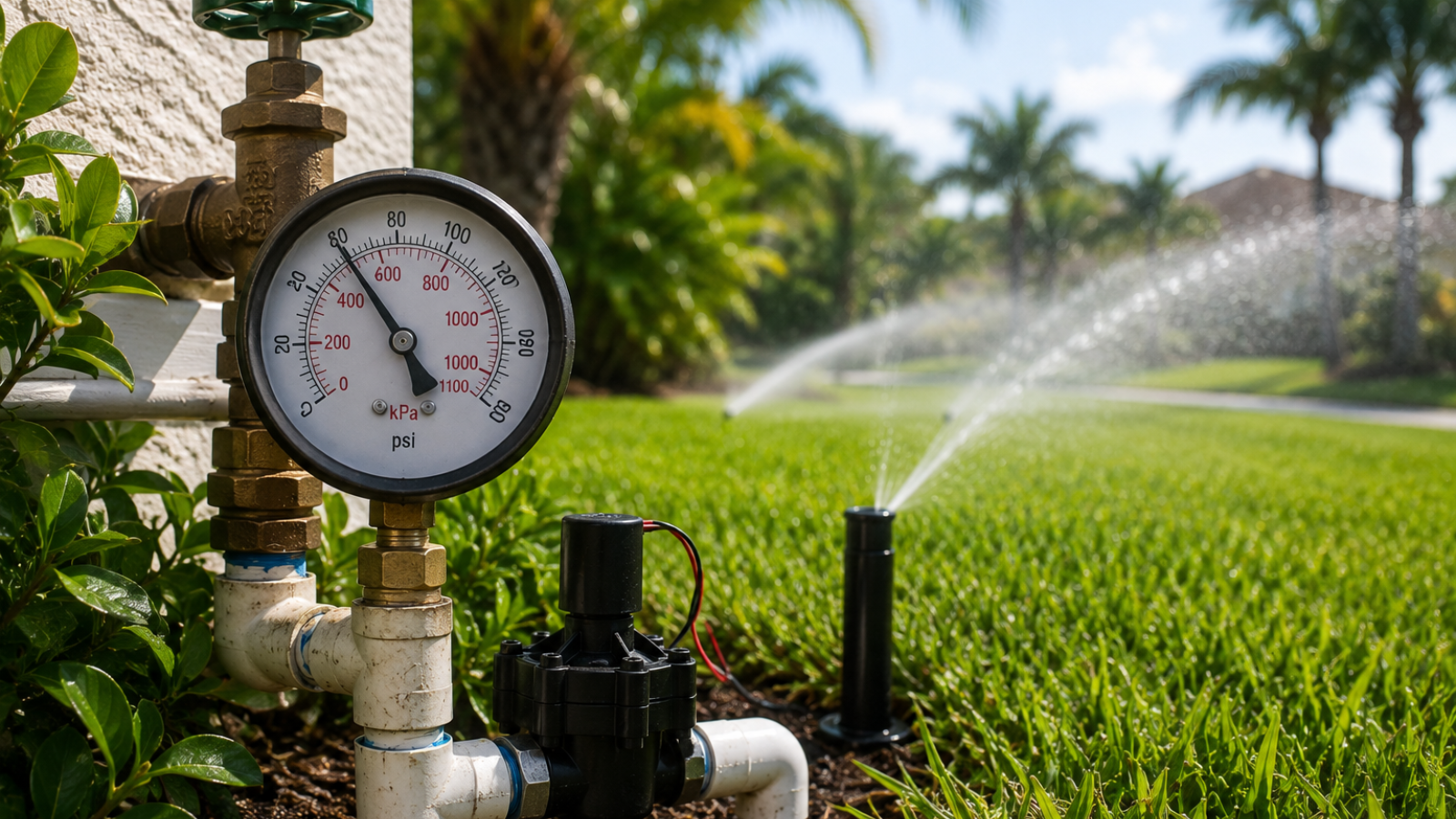
A well-designed sprinkler system keeps your lawn and landscape healthy while using water efficiently. However, even the best sprinkler heads cannot perform properly without adequate and consistent water pressure. Pressure that is too low can leave dry areas, while excessive pressure can create misting, runoff, and unnecessary water waste.
Why Water Pressure Matters
Water pressure determines how effectively water moves through irrigation pipes and sprinkler heads. It influences spray distance, distribution patterns, droplet size, and the number of sprinkler heads that can operate within one zone.
When pressure is within the proper range, each sprinkler head distributes water evenly across its intended area. When the pressure is incorrect, some parts of the lawn may receive too much water while others remain dry.
Properly designed water pressure sprinkler systems balance the available water supply with pipe sizes, zone layouts, sprinkler types, and the watering needs of the landscape.
How Is Water Pressure Measured?
Water pressure is commonly measured in pounds per square inch, or PSI. Homeowners can use a pressure gauge attached to an outdoor hose connection to obtain a basic reading. However, this measurement only shows static pressure—the pressure available when water is not actively flowing.
Dynamic pressure measures the pressure while water is moving through the system. This measurement provides a more accurate picture of how the irrigation system performs while a zone is operating.
Effective water pressure sprinkler systems require both adequate pressure and sufficient flow. A property may have a strong static pressure reading but still experience poor sprinkler performance if the available flow rate is too low.
Typical Pressure Requirements for Sprinkler Heads
Different irrigation components are designed to operate within different pressure ranges. Always follow the specifications provided by the equipment manufacturer.
As a general guideline:
- Spray heads commonly operate around 25 to 30 PSI.
- Rotary nozzles often perform well around 30 to 45 PSI.
- Gear-driven rotors may require approximately 40 to 60 PSI.
- Drip irrigation generally operates at much lower pressure, often around 10 to 30 PSI.
These figures are general ranges rather than universal requirements. The ideal operating pressure depends on the specific product, nozzle, spacing, elevation, and system design.
Professional water pressure sprinkler systems account for pressure loss between the water source and the last sprinkler on each zone. This helps every head deliver the intended coverage.
Signs of Low Water Pressure
Low pressure is one of the most common irrigation complaints among homeowners. When pressure falls below the sprinkler head’s operating requirement, water may not travel far enough to cover the intended area.
Common signs include:
- Sprinkler heads that do not rise completely
- Weak or uneven spray patterns
- Dry patches between sprinklers
- Rotors that fail to turn
- Water that barely reaches nearby plants
- Poor performance at the end of a zone
- Some heads working while others remain inactive
Low pressure in water pressure sprinkler systems can have several causes. These may include leaking pipes, broken sprinkler heads, partially closed valves, clogged filters, damaged backflow devices, undersized pipes, or too many heads on one zone.
A professional inspection can identify the source instead of relying on guesswork.
Signs of Excessive Water Pressure
More pressure is not always better. Excessive pressure can force water through sprinkler nozzles too aggressively, breaking the stream into tiny droplets. This creates misting or fogging that is easily carried away by wind.
High pressure can also cause:
- Water drifting onto sidewalks and driveways
- Uneven coverage
- Excessive runoff
- Premature wear on valves and fittings
- Damaged sprinkler heads
- Leaks at weak connections
- Higher water consumption
Palm Beach County’s heat and coastal breezes can make misting especially wasteful. Proper water pressure sprinkler systems deliver larger, controlled droplets that reach the soil instead of disappearing into the air or landing outside the landscape.
Pressure-regulating heads, valves, or regulators may be used to reduce excessive pressure.
Water Pressure and Flow Rate Are Different
Pressure and flow are closely related, but they are not the same. Pressure is the force moving water through the irrigation system, while flow rate is the volume of water available over a specific period, usually measured in gallons per minute.
A successful sprinkler zone needs enough of both. If the water source provides 12 gallons per minute, the combined demand of the sprinklers on that zone must remain within that capacity.
Adding too many sprinkler heads can exceed the available flow. The result may look like a pressure problem even when the water source has an acceptable static pressure reading.
This is why professional water pressure sprinkler systems are divided into carefully planned zones. Each zone should operate within the property’s available pressure and flow capacity.
How Zone Design Affects Pressure
Irrigation zones separate the landscape into manageable watering areas. Each zone may serve a particular type of plant, sunlight condition, or sprinkler equipment.
Proper zoning is critical because operating too many heads simultaneously can cause a noticeable drop in pressure. Long pipe runs, narrow pipes, elevation changes, and numerous fittings also create friction loss as water moves through the system.
Well-planned water pressure sprinkler systems calculate these losses before installation. Sprinkler heads are then selected and grouped so that each zone provides reliable head-to-head coverage without exceeding the available supply.
Spray heads and rotors should generally not be placed on the same zone because they apply water at different rates and may have different pressure requirements.
Common Causes of Changing Water Pressure
If your sprinkler system previously worked well but suddenly develops poor pressure, a damaged component may be responsible.
Possible causes include:
- Cracked underground irrigation lines
- Broken or missing nozzles
- Clogged sprinkler heads
- Tree roots restricting pipes
- Failing irrigation valves
- A partially closed main valve
- Municipal supply fluctuations
- Multiple household fixtures operating simultaneously
- Problems with a well pump or pressure tank
In South Florida, shifting soil, growing roots, landscape work, and regular exposure to heat can all affect underground irrigation components. Routine maintenance helps water pressure sprinkler systems remain efficient throughout the year.
How Professionals Test Sprinkler Pressure
A professional irrigation evaluation goes beyond checking one hose connection. Technicians may test static pressure, dynamic pressure, available flow, and individual zone performance.
They can also examine valves, pipes, filters, backflow components, nozzles, and sprinkler spacing. If one zone performs poorly, the technician can determine whether the cause is a leak, obstruction, design issue, or insufficient water supply.
Professional testing makes it possible to improve water pressure sprinkler systems without replacing components unnecessarily. Solutions may include repairing leaks, cleaning nozzles, resizing pipes, dividing an overloaded zone, or installing pressure-regulating equipment.
Tips for Maintaining Consistent Pressure
Homeowners can help their irrigation systems operate effectively by watching each zone run at least once a month. Look for weak spray, misting, pooling water, damaged heads, or areas receiving little coverage.
Keep grass and soil from blocking sprinkler heads, and avoid making unplanned additions to existing zones. Adding even one or two high-demand sprinklers can affect the performance of the entire zone.
Schedule professional maintenance if you notice a sudden change. Correcting leaks and pressure problems early can conserve water, prevent landscape stress, and extend the life of water pressure sprinkler systems.
Trust Bartram Outdoor With Your Irrigation System
Proper pressure is essential for healthy lawns, efficient watering, and dependable sprinkler performance. Low pressure can create dry spots, while excessive pressure can waste water through misting and overspray. The right solution begins with accurate measurements and a system designed around the property’s available pressure and flow.
At Bartram Outdoor, we understand the irrigation challenges homeowners face throughout Palm Beach County and Florida’s Space Coast. Our team designs, installs, and maintains water pressure sprinkler systems that support local landscapes while promoting responsible water use.